


The developer shortage crisis has never been more evident than it is now. Understandably, no CTO or CEO wants to risk a company stagnating due to a lack of expertise.
Setbacks and challenges that cause a shortage of developers
Key takeaways
Global talent gap: The global engineering shortage is projected to reach 85.2 million by 2030, potentially resulting in $8.5 trillion in lost revenue.
High-demand regions: The US, Nordic countries, Germany, and the UK face the most significant shortages, particularly in DevOps, AI, and Fullstack roles.
Retention drivers: Competitive compensation remains the foundational need, but flexibility, remote work options, and career growth are the primary reasons developers stay.
Strategic hiring: Staff augmentation and specialized tech recruiters can bypass local talent limitations and reduce high recruitment costs.
Culture matters: Developers prioritize autonomy and "pragmatic management" over traditional office perks and micromanagement.
You are undoubtedly familiar with the problems surrounding hiring scarce developers – tight deadlines, the scarcity of devs skilled in particular technologies and skills, competitive rates, and long hiring cycles.
As always, what is in high demand has excellent value, and it’s hard to find. By 2030, the global engineering shortage will continue to grow, reaching 85.2 million, according to the US Labor Department.
If we consider an earlier date, by 2026 it’s estimated there will be 1.2 million engineering job openings in the USA. Initially, it sounds good, but how will all positions be filled unless there are skilled independent developers with scarce skills anywhere to hire?
The concerns for CEOs and CTOs rise as the possible monetary losses increase globally due to the shortage – with a lack of skilled independent developers and more job openings, $8.5 trillion of revenue would likely be lost. Overall, all of the stats and numbers are incredibly significant to ignore.
During these challenging times in the IT industry, it’s good to have a helping hand or advice to navigate you to the right decisions and help you hire the scarce developers you need.
But sometimes, it takes a fresh perspective and openness to change.
In the words of Socrates, the secret of change is to focus all your energy not on fighting the old but on building the new.
What’s unknown, like such crises, might be intimidating, but it’s far from unresolvable. So, let’s try to help you successfully address developer shortages.
Setbacks and challenges that cause a shortage of developers
To resolve the developer shortage crisis, first identify all the obstacles hindering the process. With conscious and continuous efforts to understand the challenges, you can prepare and prevent a shortage of developers in your company.
You must consider several significant factors for assessing this problem.
Which technologies are in demand? How are your competitors doing? Is it important where the developers are located? Do you need a new recruitment strategy? Are your current employees happy? Do they feel a sense of belonging? Are you the best CTO you could be? Too many questions that need answers.
The COVID-19 pandemic changed many aspects of the IT industry, and developers had the opportunity to choose where to work and which working conditions to accept. During recent years' shortage crisis, developers often accept or decline a job offer based on the company’s reputation and the niche's popularity or complexity.
In post-COVID times, developers and tech experts can freely choose where to work, provided they are scarce and most in demand. But despite the vast job opportunities for developers, finding and hiring the best developer experts remains challenging for CTOs. As mentioned, the company's reputation and industry background, or how companies handled adverse times and still progressed, play a considerable role.
The same applies to different industries and their popularity. It’s a fact that some sectors may offer high compensation, but their popularity is low due to the job's complexity. Some sectors that are still quite popular among developers include consumer electronics, gaming, online casinos, mobile app development, web design, data engineering, and similar fields. A mismatch between industries occurs when there is little overlap between attractive fields and sectors that need to hire developers quickly, such as research, healthcare, government, and others.
For example, by 2031, employment in software development sectors is expected to rise by 25%. This is crucial to keep in mind because more vacant spots don’t necessarily mean they’ll all be filled with the top quality you expect initially. But with this fact in mind, you can take action to better narrow down and streamline the process of finding and hiring scarce developers. Or at least, you’ll be equipped with essential information to try and avoid having unfilled job positions.
What to do with these facts and information? Companies and CTOs might reconsider their next steps or evaluate their efficacy for the future. For example, you may need to reshape your recruitment and hiring strategy or increase the benefits and opportunities you offer, among other things.
1.2. Scarce skills and technologies in high demand
When we talk about the developer shortage crisis, it means that several developer roles are the hardest to fill in certain countries.
Which skills and technologies are in high demand due to their scarcity? Based on Proxify’s data, according to Victory Fernandez, technical assessment lead at Proxify, our most sought-after skills, as per the database, are:
Software engineer
Software developer
Designer UI/UX
Information security engineer
Data scientist
Data engineer
AI developer
System analyst
Network security
Regional developer shortages
Region | Projected shortage / Data point | Most scarce roles |
|---|---|---|
United States | 1.2 million openings by 2026 | DevOps, AI, Software Development |
Sweden | 70,000 developer deficit | Java, Process/Project Engineers |
Germany | 96,000 vacant IT positions | Software Architects & Specialists |
Denmark | 19,000 IT experts by 2030 | Software Developers |
1.3. Compensation and geographical location
There is a notable shortage of developers in some countries, but also, those same countries offer a more significant compensation than others. This could result from high living costs there, a scarcity of in-demand skills, and advanced digitization that pushes many roles into obsolescence as AI and machine learning advance.
And as scarce talent becomes more critical to find, technologies advance further. With this said, there will undoubtedly be more roles to fill and fewer expert developers for those roles as well.
Now, we’ll take the example of software engineer salaries across countries.
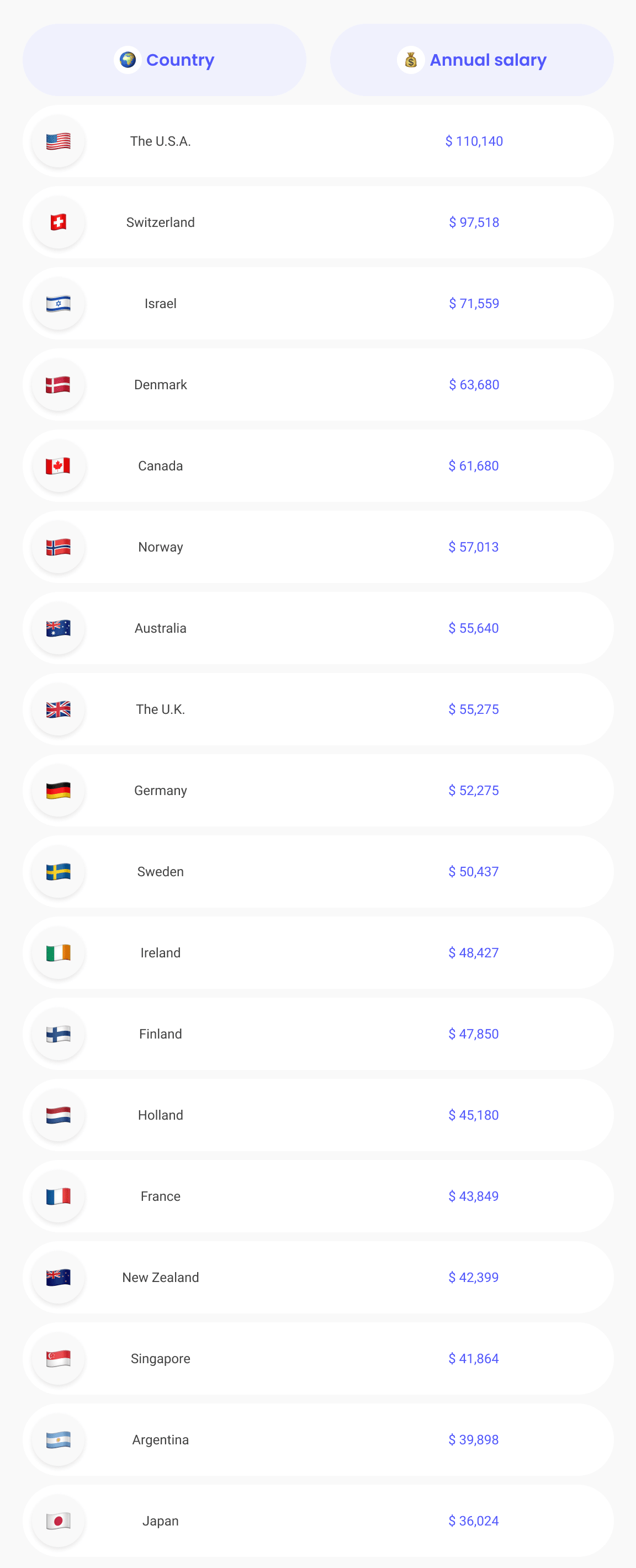
Let’s refer to one example from the list for comparisons and clarification. Despite the US being at the top of the list for the highest software engineering salaries, there is still a shortage of developers. Interestingly, almost all countries with predominant developer shortages are the same ones that generally offer higher salaries.
So the dilemma now is: how can countries with shortages alleviate the talent crisis? What can be done when you’re ready to pay for scarce skills but still struggle to find and hire those developers?
Research salary standards in different regions where you could hire independent developers. When you research the living standards and salaries in the countries of many developer applicants and compare them with your salary proposals, you’ll get a better idea of what you can afford for in-demand developers.
Find a midpoint between the location-based salary and the salary you offer – Let’s say you are from a place with high living standards. Still, you try to hire (remotely or hybrid) a developer from another country with a low living standard. Imagine they are incredibly skilled and have the expertise you need, but they ask for a salary slightly higher than what you initially offered.
If you urgently need a skilled developer that’s hard to find and hire, you might want to reconsider how much you can afford to pay them to the set salary you offered.
Value the scarce skills of the developers primarily – When you opt for skill- based pay, you might need to splurge more for the salary the developer wants since they’ll be trained or highly skilled in more than one technology you need. The more someone offers compared to your job ad, the more compensation would change in the process to a higher one
Be ready to rethink your salary strategy – consider all factors when deciding on a salary based on geography. Don’t immediately dismiss the salary a developer requires from a low-living-standard country. You can still have them working remotely and get the salary you intended for onsite work, provided that they have exceptional and very scarce skills in demand.
As you recruit and hire scarce developers, you’ll know what salary you can both agree on once you assess how valuable their skills and expertise are to you.
Consider different hiring strategies for optimal results – You can consider team augmentation and outsourcing because you never know where the ideal developer is from. If there is no local talent pool for filling tech jobs, the next best and most obvious solution would be to rely on experts from outside that country. In times when remote work is still on the rise, access to developers is no longer exclusively tied to location.
1.4. Recruitment obstacles
There are specific recruitment challenges arising around the shortage of developers. These obstacles define the whole process of finding, recruiting, and attracting developers.
Costs of recruitment – When you do things yourself, you need to ensure that you have the absolute best professionals, i.e., tech recruiters, to find developers for you to hire. The recruitment services cost is not to be neglected, as it can be hefty and must be planned for in most cases.
If the hiring process takes longer than planned, recruitment costs will increase, and the new hire won’t start as quickly as you want them to.
Lack of recruitment talent – There is a shortage of developers worldwide, which also makes it harder for recruiters to find them. When a recruiter is in charge of this, you and they both lack control over the process and its outcome.
You never know how long it will take to complete this, and it can be as short as a few weeks or as long as months. A longer time to complete the recruitment process means work is on hold, and you spend more on pre-hiring stages that still don’t guarantee quick, complete success.
Passive candidates – When we say passive candidates, we mean those who don’t actively look for a job, need to be approached, and don’t respond to recruiters most of the time.
The solution is somewhat easy in the first scenario, where developers are not looking for anything but are still interested. Here it’s crucial to have an excellent tech-expertise recruiter with a keen eye for skilled developers on the job platforms.
Things are slightly different in the other case of not responding to recruiters. Even with a good, experienced recruiter, developers might still choose not to reply to recruiters.
The reasons for this could be unrealistic relocations and strict on-site requirements, suspicions of fake companies, and, most importantly, an overall unattractive company reputation. If the developer thinks the company is dull or the management style isn't their preferred one, they’ll likely pass on the offer.
Developers will also ensure they accept offers from companies that provide many benefits and perks. The initial interview between the recruiter and developer must be informative, helpful, and pleasant; anything else deters candidates.
Now more than ever, developers choose where to work. They know what working conditions they prefer or what benefits and growth opportunities they need in their workplace. Remote working, for example, has enhanced the focus on culture, work-life balance, and productivity. And developers primarily strive for that, so we can conclude that outdated micromanagement and general, strict-sounding job ads are a thing of the past.
Lackluster job ad and offer – Think about all the opportunities you might have missed because of a dull job ad. Many developers must have seen and passed it as they continued scrolling to other jobs.
If you offer perks and benefits, always include them. If you have specific requirements for hybrid, remote, or onsite work, include them all, as long as you present all facts truthfully. Make sure to accentuate all the positives of the job position, and, for any challenges, you can tactfully and appropriately weave them into the job ad context.
Be as transparent and captivating as possible when creating the job ad. This is especially important for in-demand, scarce skills – you don’t want a perfect developer to pass you by just because the job ad doesn’t mention all the positives and perks you offer.
No flexibility or remote work – Speaking of job ads, one of the most essential aspects developers value is flexibility and the ability to work remotely. During the pandemic and the shift from on-site to remote work, developers and many other professionals realized that the quality of work is not dependent on office premises or strict working hours (with minor exceptions such as obligatory and regular meeting attendance and similar).
What could be done to reduce the recruitment obstacles when hiring developers?
An incredibly efficient option to consider is staff augmentation and outsourcing through other agencies. But what would staff augmentation mean for you amidst a developer shortage crisis?
1.5. Workplace culture that attracts or deters developers
Workplace culture is something that can make or break a deal sometimes. And this applies not just to developers. Developers thrive with a good company culture, but with a bad one, they might recognize it early on, skip the job offer, or even quit.
So how do developers know what to accept or reject in job offers and ads?
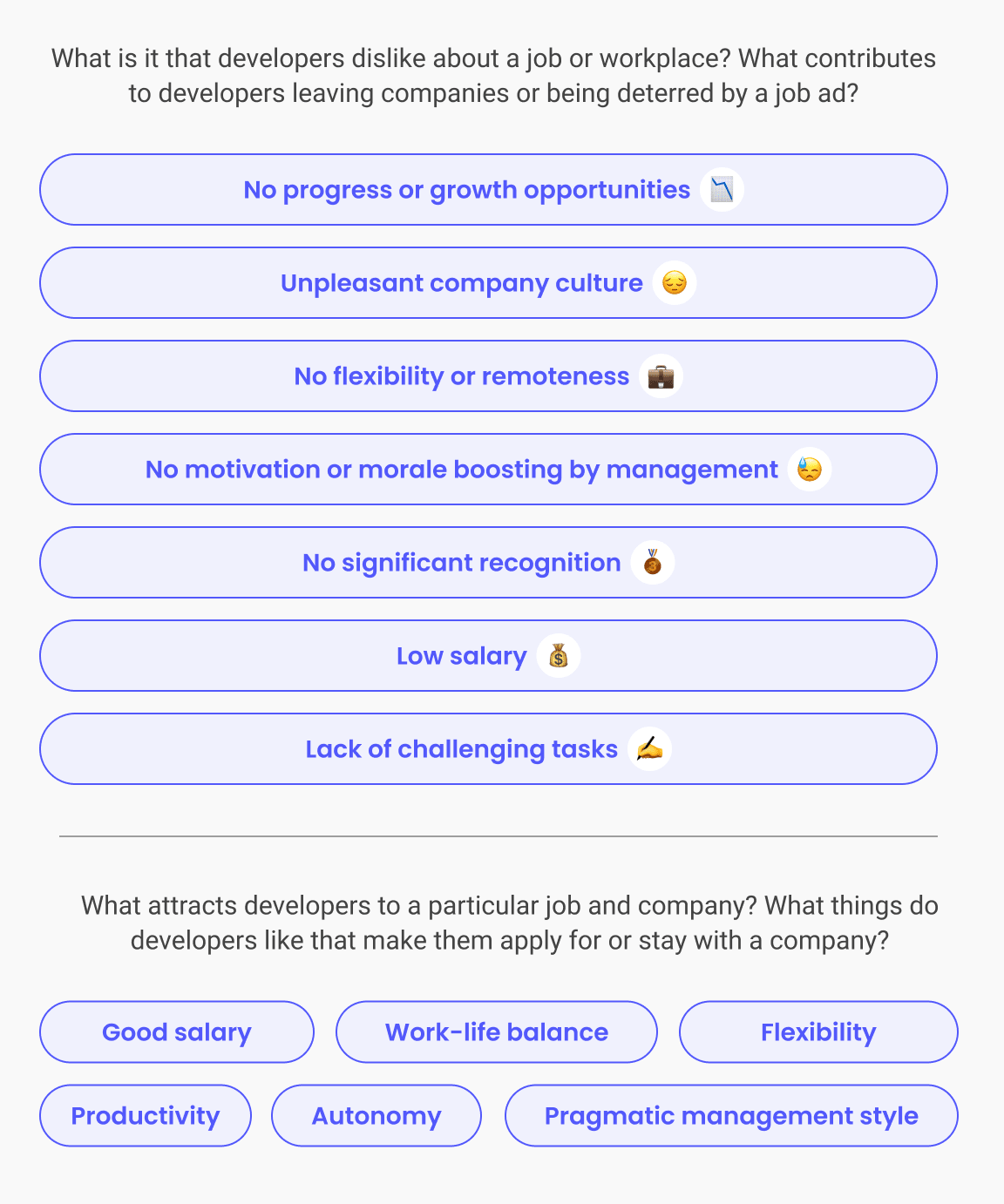
They research, evaluate, and choose companies carefully, and consider the interview process and the overall impression it leaves on them. The company's lousy rep or unfriendly, inexpert, and impolite recruiters will surely lead the developer in another direction. This only accentuates how critical first impressions are, whether through ads or interviews with the recruiter, the first company representative developers meet.
What attracts developers
Competitive salary
Work-life balance
Autonomy & flexibility
Growth opportunities
What deters developers
Micromanagement
Lack of recognition
No remote options
Stagnant career path
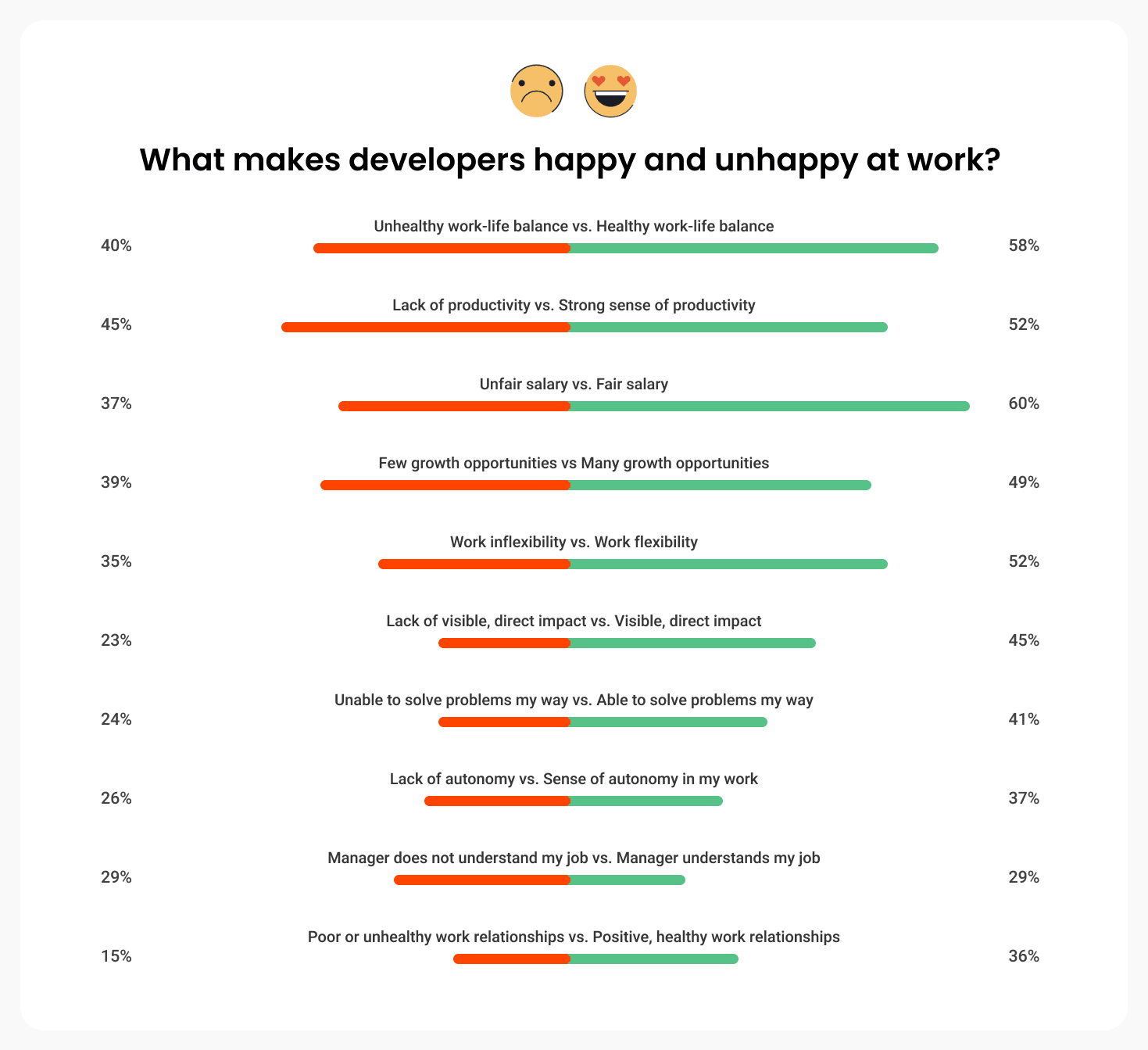
What can overcome the negatives that developers point out about a workplace and its culture?
Value the ambition and expertise of developers. They all want to take great pride in their work, so ensure you include growth opportunities for that job role. When you allow developers to progress, they know they have a future with your company and won’t be out of the picture anytime soon. It means you like how they think and work, and you’d like to see more of it in the future.
Don’t stop focusing and working on the company and team culture values. A positive, productive, and cohesive team environment makes developers happier and more likely to stay with the company longer.
Remember that flexibility and remote work are crucial to attracting employees, and tech experts have highly valued them in recent years. This conveys trust and leaves no room for micromanagement, which can instantly rob you of the best developers.
Ensure that management reflects good culture and company values. A good manager doesn’t control. Instead, they motivate developers. Good managers nudge developers toward progress and challenge, and they play a massive role in employee retention.
Be generous with compliments or recognition of the developer’s work. A good word goes a long way to help developers be happier in the workplace. Kindness, respect, and appreciation motivate developers to work even better and learn more.
Be ready to offer a competitive salary and outsmart the competitors. This shows that you value the expertise of the scarce-skill developer and that you’re transparent and fair.
1.6. Delegating tasks and obligations
How does the work dynamic play out in the shortage of developers? How do you delegate tasks to a developer in a way that leads to long-term retention?
The way CTOs and managers closely follow developers' work should be a relaxed, cooperative approach to micromanaging and piling on tasks. Delegating should always be done to propel productivity and open communication between both sides. It shouldn’t feel pressured. But, for this to feel pleasant for the developers when you need to delegate, think of the following factors that every developer needs in the workplace:
Assigning compelling and challenging engagements and building new things
If there is one thing that will undoubtedly chase the developer straight into the competitor’s company, it is stagnation in the workplace. While this may not be the case for most occupations and job roles, it’s a solid rule for scarce, in-demand developers.
Since you’re hiring an in-demand developer, you’re expected to give them complex, challenging, and unique tasks.
A good rule of thumb is that the tasks you delegate will be a prominent part of the developer’s portfolio in the future. Valuable and unique experiences would open more opportunities for these developers in the future.
Leading toward career opportunities
Let’s put it this way. Why would a highly sought-after developer stay in a company that doesn’t offer learning and growth opportunities? To achieve retention, you need to think broadly about the developer's future in your company.
This can range from courses to training or additional qualifications that will make the developer happy to be considered for such progress.
Allowing a team member's growth and career progress doesn’t mean you’ll lose them from the team. It means you trust them enough to provide growth opportunities, you like their mindset, professionalism, and expertise, but you’d gladly upgrade those aspects in the developer to boost your workforce for the better.
Ensuring the developer is a good team fit
A developer who feels happy and comfortable in the workplace and with the team is a productive developer who will most likely stay with you longer. Imagine if anyone, not just a developer, feels out of place or doesn’t quite belong in the team. Chances are those developers will not be with the company for long.
How to delegate masterfully and retain developers for longer?
How you delegate tasks and obligations shows the developers how much you value them. It’s all about whether the developer receives meaningful tasks and whether you delegate tasks with respect and reasonable demands relative to the rest.
To delegate better and improve a team's cohesion and work dynamic, you’ll need to understand which aspects are worth implementing and improving. Good delegating relies on
Transparent communication – No team member likes sketchy communication with vague statements and demands. Give specific instructions and requirements, and listen carefully to the developers for any issues or concerns they face.
Good time management and setting reasonable deadlines – Unrealistic goals for the workload deadline will hinder the workflow. No developer thrives in a rushed and disorganized work environment.
Training and course opportunities – Once you start delegating tasks and managing the developers' team, you’ll notice their concerns, if any, but only if you listen carefully and communicate. In such cases, you can refer to additional training and courses to reduce the uncertainties of developers who are eager to learn.
Regular and constructive feedback – Try to follow the developer's work in a non-invasive way. When you’re aware of developers' successes and setbacks, you can offer constructive assistance and feedback.
Trust and trustworthiness – By building trust with developers, you ensure that the developer you want to retain stays with your company longer.
To retain developers, you need to improve your delegating skills accordingly:
Know the strengths and weaknesses of the developers
Give clear instructions and valuable materials
Set reasonable deadlines
Allow learning of new skills
Promote good work-life balance
Offer constructive and helpful feedback
Empower the team members and nurture good relationships with them
Be patient
Avoid work overload and task piling
Have a clearly defined schedule of the workflow and hierarchy
Recognize obstacles early on
Rely on recognition and reward for a job well done
Dealing with the shortage of developers
Being informed about the developer shortage crisis and its causes isn’t enough. However, specific strategies for attracting in-demand developers always work well for resolving this.
All the solutions are in the most problematic parts you've faced so far – recruitment costs, posting job ads, determining compensation, or even rethinking traditional work conditions. You probably bear most of the responsibility for planning the entire hiring process, which takes a lot of time, money, and effort.
2.1. Opting for outsourcing and staff augmentation agencies
Think about it this way – in uncertain times of a significant developer shortage, wouldn’t it be ideal to secure the best developers with sought-after skills for yourself?
One good option would be staff augmentation. There is just one link between you and the much-needed developer, and the agency or provider for staff augmentation already has those developers in a broad network.
But how is this relevant for reducing the developer shortage crisis you face? How does it relate to you?
Try to answer the following:
Do you need help finding specific and scarce skill developers to hire?
Do you face limitations, i.e., just browse the local talent pool?
Is there a significant developer turnover in your company?
Do you find it hard to substitute for employees when they are on time off and leave?
Do you often splurge on the hiring process without seeing the ideal results you invested in?
Does the search for someone to hire take too much time and effort for you?
Is it hard to get someone to vouch for the developers you hire?
Does all responsibility fall on you if the developer you hired underperformed?
Do pricing models and strategies need to be clarified when discussing salaries with candidates?
Does it seem that the results could be better no matter how much effort you put into the hiring?
If you said yes to most or all questions above, you are facing the developer shortage head-on. But it also means that you probably rely solely on other forms of employment – freelancers or traditional employment, among others.
And, if something doesn’t change in the hiring strategies you already use, you know what follows – the same issues will reappear, and you’ll probably say “yes” again to these questions you just read above.
If you choose staff augmentation services, what’s in it for you? Fair question.
Imagine the following:
Fewer recruitment costs
When you hire others to find developers for you, there are no extra or hidden costs that might otherwise arise if you do this on your own. Staffing agencies have a rich network of recruiters who have already gathered and vetted many developers.
Easier access to skilled developers in the talent pool
As mentioned, recruiters at staffing agencies are expertly trained and experienced in thoroughly reviewing the talent pool and selecting only the best developers. They know how to do this quickly, easily, and efficiently.
Expert tech recruiters for vetting
With agencies and recruiters for assessment and vetting, you can expect only the most qualified independent developers to rise to the top and be onboarded by the agency network. Imagine how easy everything would be if someone else guaranteed the expertise of developers. Well, that’s precisely what staffing agencies do, among other things.
A professional and captivating way to attract developers
Even though this is something agencies do before matching the client and developer, it’s a significant stage that’s key to attracting experts. With a bland job ad, the best developers are already on to the next ad. The dull ad will go unnoticed, despite all the upsides of working for you.
For example, at Proxify, we firmly believe that the entire company culture is visible in the job ad, so we strive to reflect our cultural values first and foremost in the ads when hiring developers to join our network. The job ad tells the developer almost all the crucial things they need – working hours, flexibility, work location, compensation, and other expectations.
The best way to reach the scarce developers and hire them is to let them know they’ll be happy, successful, and valued in the workplace.
Flexible hiring models and arrangements
You wonder why this is relevant for the shortage of developers. Of course, this is a huge benefit for clients because different, flexible hiring models are always a cost-efficient choice based on availability (part-time or full-time, and more).
But more importantly, when staffing agencies have various staffing plans, this opens up more hiring opportunities for developers. This way, if some developers have limited availability, they can still get hired for the engagement that requests part-time work.
2.2. Engaging the right recruiters to find and hire scarce developers
Consider the importance of having highly experienced recruiters to grow your team of developers. You want good recruiters “hunting” the best developers for you, with tech evaluation of the skills foremost in mind. These tech recruiters will be a massive asset to you because they will help reduce the developer shortage at your company.
So, how does an expert tech recruiter help you reduce the developer shortage? Why do you need these recruiters? What do these recruiters bring to the table as their contribution?
They know which specific skills and technologies to target
Tech recruiters know their way around job platforms. They are masters at researching specific keywords, skills, and technologies, and they can evaluate whether someone should be interviewed in later stages by reviewing their public professional profile.
They know their way around creating job ads
The tech recruiter won’t just create a job ad with a few specifications to post. Instead, they will create a job ad as detailed as possible, including specifics closely tied to the scarce skill in demand. Instead of browsing through countless developer resumes and profiles, they hand-pick the ones that seem most promising for the role.
They cover vital and concise aspects of the interview
When tech recruiters prepare to interview developers, they assemble concise questions for that specific job role. The questions they use examine the developer’s expertise in detail, as well as the soft skills. They consider everything to get an excellent skill, expertise, and team fit. The questions they use are thorough and oriented toward a relevant assessment of skills.
Expert tech recruiters know the importance of hard and soft skills. Victory Hernandez, the technical assessment lead at Proxify, said:
“We are not only looking for candidates with senior technical skills, but also great candidates must also combine great attitude characteristics and professional standing.”
Victory Fernandez
This proves how important it is for the scarce developer to fit well within your team, because someone who’s not a team fit might not stay long with your company, which increases employee turnover. Even the most skilled developer with the most sought-after experience won’t last long at a company unless they exhibit good cultural and team-fit values. These things build a future for them in a company, not just what they can do in terms of tasks.
They can differentiate between good and excellently skilled developers
Most importantly, since tech recruiters specialize in tech roles, they can decide early on whether to move forward with a candidate. They narrow their choice to the most detailed information when revising their selection of job-seeking developers. They’ll differentiate between a good software developer with a few years of experience and an excellent software developer with senior-level experience and challenging engagements in the resume.
They save you time and money
When the finding and hiring process gets shortened, it means less money spent on it, and you’ll get the in-demand developer much faster than otherwise.
They represent your company and brand too
The tech recruiters may be focused on technical aspects and interviewing foremost, but they also get to know your company. When they reach out to developers, they transfer your company’s values to them.
2.3. Revising the criteria for finding and vetting scarce skill developers
When you want to hire a rare developer, you need to know precisely what you are looking for. Not only that, but you should continuously review and improve your strategy for reaching the scarce developers, and rely on in-depth vetting methods.
So, how do recruiters and CTOs find the in-demand developers? What is key during this type of dev search they make? Or, what helps them narrow down their search in general?
Knowledgeable about technologies
Tech recruiters and skilled CTOs know the ins and outs of the recruitment process and the specifics of a given technology, so they have a clearer understanding of it than others. They conduct the process in a concise, focused manner rather than vaguely assessing developers’ skills solely for role-filling.
Focused on improving the job ad format
Instead of creating and posting a job ad that covers the basics, they go the extra mile by adding as much information as possible. All requirements in the job ad are clearly defined, so when an in-demand developer reads it, they know exactly what will be expected of them in the workplace. Not only this, but they know their way around creating captivating ads from every aspect – everything is covered nicely, from the phrasing of the ad content to the visuals.
This way, tech recruiters and CTOs can better focus on scarce developers, because devs who aren't in demand won’t be as tempted to apply to the job ad and will move on to other ads. This leaves only the scarce devs in the final rundown of resumes.
Interested in possibilities for referrals and attending networking events
True experts never stop their curiosity or communication with others because every contact in the professional sphere can be a potential benefit in the future.
There are countless networking opportunities at tech and IT events, including tech conferences, hackathons, and coding workshops. Spreading the word about scarce skills while attending such events is not only possible but incredibly useful for pinpointing the developer workforce potential there.
Great team builders never miss opportunities to enrich their knowledge and attend networking events and conferences. At such events, they broaden their contacts list and gain even better knowledge of the industry. They stay up to date with the latest trends and other specific fields of the industry.
Knowledgeable of job platforms
Platforms like LinkedIn, Stack Overflow, GitHub, and AngelList all offer insightful information for developer job seekers, useful stats, and relevant data that help speed up the hiring process for developers. Posting job ads or browsing the job market is an excellent asset for tech recruiters.
The more they educate themselves by relying on some platforms, the more they equip themselves with crucial info for reducing the developer shortage. And the significant presence on professional platforms is a great opportunity to promote the brand to potential developers for the job.
Focused on constant progress
It’s almost impossible to have a poorly managed and marketed website and get the best in-demand devs. It’s also impossible to have average-curious employees and expect to hire the best devs.
The first thing that scarce developers do after seeing a job ad is check the company’s website. If something on that website seems unprofessional, unclear, or vague, the developer may be reluctant to work for that company. But if the website shows the company culture, the opportunities, and how they operate – all of this is attractive to see if you’re in demand and can choose where to work.
So, great CTOs and tech recruiters can also look for any chance of improvement in the company. They will suggest and implement improvements and upgrades to their management and recruitment strategies. They will actively find and manage scarce-skill devs because they know how to, and they are sure that the company works in a way that will retain devs.
Attentive to soft skills in developers
Soft skills of in-demand developers are just as important as their hard skills. Why? Because devs with many strong soft skills will exhibit responsibility, productivity, and effective communication. Once recruiters recognize strong soft skills in candidates, they can be sure those devs have great potential as employees.
What specific traits do in-demand developers have that make them stand out from other good developers?
To ensure that the developers are skilled professionals, recall these factors:
They know a scarce technology perfectly and have solid expertise in it
They have years of experience with that technology
They are fast learners
They exhibit excellent communication skills and fit well as a team player too
They crave to upgrade their knowledge
They are eager to advance their career
They show excellent problem-solving skills
They rely on and reuse previous proven solutions
They masterfully use various tools, programs, and platforms in their work
They aced their coding and other technical tests
What are the criteria for assessment and vetting for scarce devs? What makes vetting successful?
Let’s see what factors recruiters and interviewers take into account to rest assured the vetting turned out a success:
Thorough reviewing of resumes and portfolios
Referring to the references for that candidate
Verifying the expertise and work history of the candidate
Relying on senior developers for technical interview relevance
Assigning in-depth and adequate coding tests
Noting the punctuality, listening, communication skills, and critical thinking of developers
2.4. Competitive compensation
Competitive compensation means you’ll be able to spend just as much as, or a bit more than, competitors for the same developer role you need to fill.
We mentioned how countries with the most shortages also offer the highest salaries. So, it shouldn’t be surprising that scarce skills and in-demand developer roles require higher compensation than other roles and competitors, especially in tech shortages.
The increase in salaries became even more prominent during COVID-19, when automation and digitization advanced; we became even more dependent on technology, and, logically, scarce developers took to raising salaries as a predominant factor in the value they bring.
As salaries have increased over the last few years, in-demand developers have had the upper hand in salary negotiations. If someone wants the scarce skill dev, they’ll be ready to adjust the compensation offered primarily. It can be concluded that increased tech salaries are one trend to follow to achieve developer retention in hard-to-fill roles.
Indeed, developer retention is not solely connected to salary; there are other factors at play. However, pay is undeniably an essential factor in whether an agreement between employers and candidates is made or broken.
We can even apply Maslow's hierarchy of needs to developers’ retention.
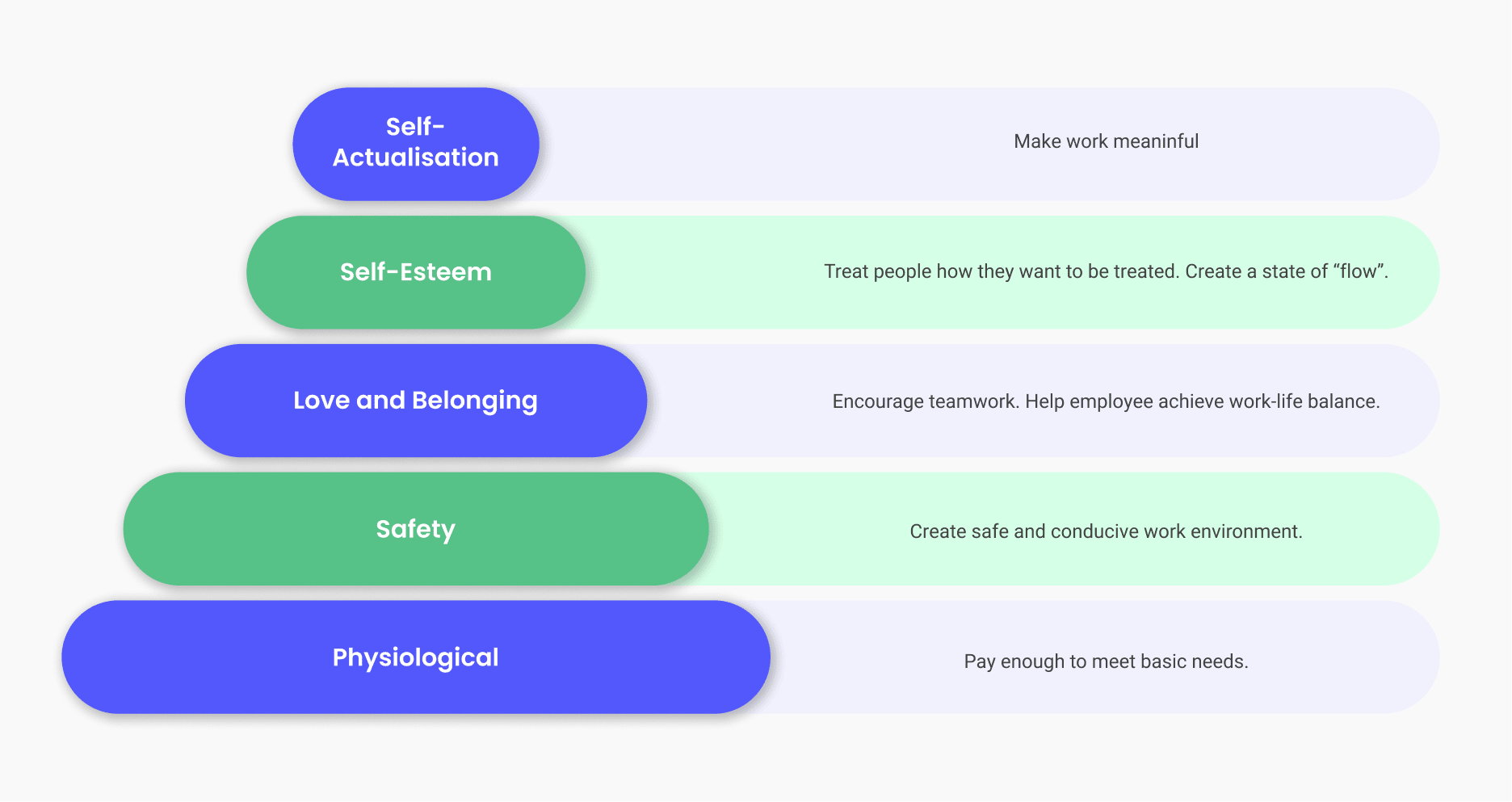
We can see how meaningful work, team cohesion, self-improvement, a sense of belonging, esteem, and a feeling of safety in the workplace – all play a role in retention and employee engagement. Still, at the bottom of the pyramid, we see the basic need: compensation.
Once you are transparent and definitive about your competitive salary offer to developers, i.e., once you cover that basic (and above-basic) need of the hierarchy for them, you have an excellent chance of hiring in-demand developers and retaining them, too. So, if the salary is not mentioned in the ad or discussed early on, and if it’s lower than the competitor’s – that developer will head elsewhere, and ASAP too.
What can be done?
Remember that determining a competitive salary will contribute to retention and is one of the few factors preventing a crisis of shortages. It’s now crucial to
Find out – Spend some time researching the tech industry and its in-demand dev job roles. Compare the salaries offered with what you offer to developers. You’ll know who you compete with based on how much you can pay devs compared to competitors.
Keep up – Just finding out what competitors offer is not enough. Now it’s time to do something about it. Keeping up with the industry's salary trends means offering a salary at or above the competition while ensuring your success and retaining the dev roles they want.
Show it – Find a way to mention the compensation in the job ad or company website. This kind of transparency attracts in-demand independent developers and shows you as trustworthy, transparent, and as someone who treats employees well. Developers will know they are valued by your company and treated fairly, and every expert wants to thrive in such a work environment.
Why is competitive compensation significant?
Everyone likes to be paid well – this is no surprise - but everyone appreciates being compensated as they deserve. Companies that pay well are always the priority choice of developers. They will always go to the company that pays more, while also considering other retention factors.
No one wants to leave if they are paid well – another one of the “goes without saying” parts, but when developers have a sense of belonging in your company and are paid accordingly, they would not be in a rush to leave at all. So this is less employee turnover too.
Productivity and team culture peak – Developers who know they are valued and appreciated in a company work better, more efficiently, and productively. This is not the only thing motivating devs to excel at their work, but it surely boosts the workflow.
2.5. Flexibility and remote work
Flexibility and remote work are now other significant factors in determining whether developers (and other occupations, too) accept or refuse a job.
In general, companies with remote and hybrid workers have been shown to have happier and more productive workers than companies that insist on office presence and strict work schedules without flexibility. Longer working hours without the chance of flexibility don’t seem beneficial for employees, nor does insisting on onsite work only – which results in demotivated, demoralized, and anxious employees.
But there is another factor to consider – developers often quit due to the company’s rigid rules on working hours and location. Not allowing flexibility and remote work to in-demand developers leads to devs quitting because they cannot keep up with the burnout, stress, and lack of a productive, comfortable work environment they like.
The resignation trend worsened during the pandemic, when many companies once again demanded traditional working methods. Ironically or not, this is one of the significant reasons that deter the best devs from the company.
Why are flexibility and remoteness necessary, and how does it affect the shortage crisis overall?
These two factors vastly reduce the shortage crisis and promote employee retention in the following ways:
Promoting good work-life balance – When you hire remote developers and allow flexible working hours, you encourage them to maintain an excellent work-life balance and avoid burnout or frustration. No one has a perfect, unshakable focus at work at all times, and the flexibility of remote work allows devs to work how and where they want – as long as they meet task deadlines and manage their time well.
Improving focus and productivity – In an office setting with frequent chit-chat and background noise, it’s challenging to do a job well. When devs are derailed by distractions and forced to focus during certain hours of the day, we could all agree that this might not end well. Trusting devs to do a good job means removing all distractions and allowing them to focus uninterrupted at their chosen location.
Achieving a happier mindset – Similar to the work-life balance, a dev with remote and flexible work is much more satisfied because they are not micromanaged and strictly controlled. A happy worker is productive, and a happy dev is trusted to provide quality work without being pressured and micromanaged.
Managing costs and saving time – It is good not to be obliged to commute (unless there is a hybrid option too). These benefits apply to both you and the developers. Without office space costs and without wasting time (and money) on telecommuting, there is better productivity, better work-life balance, more free time for leisure and rest for the devs, and fewer costs for you as the employer. When devs are well-rested, don’t commute in the early mornings, and can freely choose their peak focus hours, you can expect them to be healthy, happy, and more likely to be retained for longer.
Broadening the talent pool – CTOs and managers who rely predominantly on hybrid and fully remote teams can extend their teams faster and more straightforwardly because the talent pool broadens when it spans more locations worldwide. And more developers will be eager to work for companies that offer flexibility and remote work. When it comes to hybrid work, this is an excellent solution to consider as well. Remoteness can be partial (as in the hybrid work case) and still result in a good work dynamic and employee cohesion. If developers are okay with a hybrid work environment, they also benefit from the occasional socializing with coworkers, among other factors, without continuously compromising their best peak focus hours.
Hybrid and remote workers are more productive than in-office workers, but one thing is sure – both remote and hybrid work remain popular and might stay unchanged. But also, developers that get to choose if they want hybrid or remote work, with flexible time too, are the ones to apply, work for, and stay in that company.
Let’s revise:
In the digital era of easy connection, is physical presence always obligatory?
Does the physical presence of the dev prove their work is good?
Does a strict 9-5 schedule prove that the dev was focused and productive during those hours?
Is the talent pool suddenly broader when you rely on remoteness and hybrid work?
Answering these questions narrows down and resolves the shortage crisis issues. In most cases, the shortage can be resolved like this through flexible and remote work options. In-demand developers can be found anywhere globally, so expecting devs to reallocate might not be feasible.
But if they have scarce skills, live abroad, and want their freedom for time management – they should get it. Devs who are satisfied and trusted do not leave companies. But companies that are stubborn about flexibility or remote work will probably need to rethink their developer retention strategies if they want to keep the most sought-after developers.
2.6. Low-code and no-code platforms
In the past, low-code and no-code platforms were more popular as a partial replacement for skilled developers when time was of the essence. These platforms are not an immediate solution and are not as under the spotlight as before. But they may be relevant if everything else fails.
Low-code platforms are where devs can design and develop apps with ready-to-use components. With this, devs easily and quickly create apps and systems. No-code platforms are even helpful for users who aren’t tech experts or devs, or who don’t have formal tech expertise – without coding, users can develop an app, simple as that.
Interestingly enough, both low-code and no-code represent a strange mix of problem and solution – in the context of a developer shortage crisis. While these platforms improve productivity, enhance knowledge, and help retain current employees, they are still not a solution for finding an in-demand dev with scarce, high-demand skills.
Low-code and no-code are not dev replacements. They are quick and easy solutions in dire need of devs when you need more time or resources to hire a team. These platforms are not scalable, customizable, or fully secure.
If we think of this as a solution to the dev shortage crisis, it is like a bandage instead of a cast for a broken bone – it’s minimal effort and in the wrong direction.
But on the other hand, another highly possible scenario is also here. For example, the low-code option can be a great assistant and time-saver for skilled developers. While they use this platform to finalize the simpler things quickly, they’ll have plenty more time to focus on the more complex and challenging development work.
And let’s not forget, if you need an in-demand dev with scarce skills, they would not and should not be working on the simplest, low-code tasks in the first place. Instead, they will be responsible for the bigger challenges mentioned above.
After resolving the shortage challenges
When all factors that contribute to developer shortage are identified, what follows are the steps and measures that resolve this. But, of course, that is not the final stage of handling the shortage crisis.
A trickier aspect is maintaining the successful resolution of the shortage and retaining the in-demand developers you hire.
It’s pretty common to lay back and relax and consider it all done, but equal efforts, or even more significant efforts than before, should be made now to retain happy and productive developers in your company.
Taking action is not too complex as long as you and the developer are keen on progressing.
3.1. Increasing retention
It’s not easy to find and hire good in-demand developers when a developer shortage crisis occurs. But once it happens, retention is the next significant challenge.
To preserve developer retention and prevent employee turnover, there are several key considerations.
Adopt the mindset of in-demand devs – To successfully address the shortage crisis and retain in-demand experts, you will need to think like a developer in that same position. How else would you know how to make conditions better for a developer? Research the market and everything there is to know about scarce skills and developer roles to take better steps.
Have empathy in mind – If you rely on empathy to understand the mindset of in-demand devs, you cannot go wrong. When you put yourself in the shoes of an in-demand dev, you can at least closely experience the challenges and benefits these devs face. You will find out what novelty would be good to incorporate in the workplace or what would make the job easier and more productive.
Be a fair delegator – Treating everyone in the development team equally boosts team morale more than anything. But it is not just about delegating equal responsibilities or equal task volume and complexity. Fair task delegation in this context also means assigning challenging, specific functions to the in-demand dev with expertise, and assigning other tasks to other devs. Everything is delegated to the most suitable team member, with reasonable deadlines and no pressure or rushing. As mentioned, a great dev will quickly be hired elsewhere if they are not challenged with specific engagements and tasks, are undervalued, or see mishaps in how their duties are assigned.
Be curious and active in the job market – stay relevant. You can learn many valuable things by exploring your industry. Stay in touch with acquaintances and coworkers in the same field and industry, stay informed about tech innovations, and attend tech conferences and networking events as often as possible. These are the events where you meet like-minded people who do the same as you and probably even have the same shortage issue in mind as yourself.
Align the compensation goals with the developer’s expectations – If possible, it is strongly advised to try to align your salary with competitors' salaries or even outdo them. Try this with benefits and perks too, not just the salary. Compensation is one factor that in-demand devs instantly notice, along with other perks they get. Understand all tech roles well before you delve into compensation determination. Or, if you have no time to do it, you can always rely on staff augmentation and outsourcing agencies that have already set these rates and handled everything else along the way.
Forget about micromanaging and limitations – Even with a substantial salary, great perks, and benefits, a micromanaged dev will rush to another company without thinking twice. Suffocating your teammate's thought process and work hours with countless trivial interruptions, time monitoring, and similar things is something no one handles well, especially not devs who need a more flexible approach to work and brainstorming sessions.
Prioritize work-life balance – Practice what you preach and be a leader with an excellent work-life balance so others can follow your lead. Without work-life balance, the devs might be near burnout or become less productive. There is a fine line between bursts of productive energy and never-ending work, so be careful not to conflate the two in devs’ work. Respect the devs' free time and, as mentioned above, carefully delegate tasks.
Encourage growth and skill development – If you want to hire in-demand devs and retain them for as long as possible, let them focus on growth and continuing education. Providing courses or other qualifications for devs who want to upgrade their skills is a fantastic way to make their work more meaningful and help them expand their skills.
Use innovative approaches whenever possible – Keeping up with updates and novelties in the tech industry is vital. The in-demand devs are professionals who have mastered a skill, ideally more than most devs. Understandably, these types of devs want to excel at their work and work on more complex tasks with their scarce skill. Developers in demand need excitement and a dynamic workflow, and want to use the latest technologies whenever possible. This improves their work, productivity, and progress. This also means a better retention rate because why would devs leave a company that encourages them to upgrade their skills and practical expertise?
Try augmented and hybrid dev teams – When you try out remote and hybrid teams, this is, in a way, a retention strategy by itself. As an unwritten but certain rule, employers who allow some flexibility in employees' locations tend to retain those employees longer. When employees have the freedom to be in the office some days and the rest of the working days where they choose to work from home, this is a sure sign that you keep employees happy and you trust them and their expertise, even if they’re partially present in-office. Developer retention is achievable and a direct result of all efforts combined throughout working together as a team. But even more precisely, retention results from respectful communication, fair compensation, freedom, trust, valuable connections with other team members, recognition and endorsement, and motivation-driven work dynamics.
3.2. Courses and constant learning
If there is something that career-oriented devs like, it is the progress of their knowledge and skills. This means that their learning didn’t stop and won’t stop either – they've already honed their expertise in a scarce skill, so why would they stop upgrading if that same skill upgrading made them so sought after in the first place?
And overall, you can provide training, resources, courses, qualifications, and skill-upgrading opportunities covered by the company. By this, the dev would become even better at what they do, affirming their in-demand status. On the other hand, you get a more skilled dev already on your team, and, with that, even more valuable business progress in the long run.
We are in an era of insanely fast progress, automation, and new technologies, so it’s essential to keep up with it all. This is precisely what in-demand devs want too. In a way, if you wish to grow your business and company, you’ll need to align it with the growth of your valued devs on the team. To keep up in a fast-moving tech world, let free-spirited, independent-thinking devs do what they do – learning and working at their own pace while still being part of a hybrid or distributed team.
Don’t immediately think that offering additional resources and learning will equip the dev to go elsewhere with the help you provided, even if that’s your initial thought. It’s the opposite – the progressive devs that learn with you stay with you.
As mentioned in the sections above, a stagnant, unmotivated, and micromanaging work dynamic repels talent who can choose their ideal position. However, by helping them stay relevant and spark their thirst for knowledge even more, you are positioning them to advance within your company and securing yourself with invaluable expertise on the team.
Developers like to learn from every valuable source available to them – whether from sources of their own choosing or from more seasoned professionals around them.
At the same time, allowing for autonomy in learning is crucial. Why? All tech trends and novelties that are utilized come from a dev’s desire to progress and discover new things to implement in their work. And this is possible and best when you allow remote and hybrid work, with uninterrupted focus and freedom in choosing what, when, and how to learn.
Finishing remarks
A developer shortage crisis is not an easy challenge to tackle, but it’s necessary to address it with all available efforts and resources. Times of adversity call for specific measures, even urgent ones, to save a business in the long run.
With everyone’s efforts, a crisis of this type is more than solvable, and “everyone’s efforts” encompasses an in-depth understanding of the dev shortage, not just expecting it to resolve itself. Once you know the job market or why some devs are so scarce, all solutions will start to fall into place like perfectly fitting puzzle pieces.
What can you do to make the most of a significant dev search hunt like this? How willing are you to change your hiring strategies and gain more than before?
Or perhaps, hopefully, you've gotten a glimpse of potential improvements in hiring and management by now that you can apply. So, if there was a solution for finding scarce devs, ready and served to you, it is alternative hiring strategies like hybrid and remote teams. By trusting staff augmentation companies and thus saving time and money, you’re tackling all the challenging aspects of the dev shortage crisis – efficiently and in a single attempt.