

Choosing the right PHP framework is crucial for any developer or team embarking on a new project. Symfony and Laravel stand out as the most popular and robust frameworks among the many options available.
Each brings unique strengths and serves different development needs, but the question remains: Which is better?
Let's get into it.
Key takeaways
Symfony is the better choice for high-load, enterprise-level applications that need maximum performance and modular flexibility.
Laravel is preferred for rapid development, startups, and beginners due to its elegant syntax and approachable learning curve.
Community & ecosystem: Laravel boasts a larger, more active community with extensive third-party tools like Forge and Vapor.
Security & testing: Both frameworks are equally robust, offering high-level protection against common vulnerabilities and excellent PHPUnit integration.
Deployment: Laravel edges out Symfony in DevOps efficiency with its dedicated tools for zero-downtime and serverless deployment.
1. Performance and scalability
Symfony
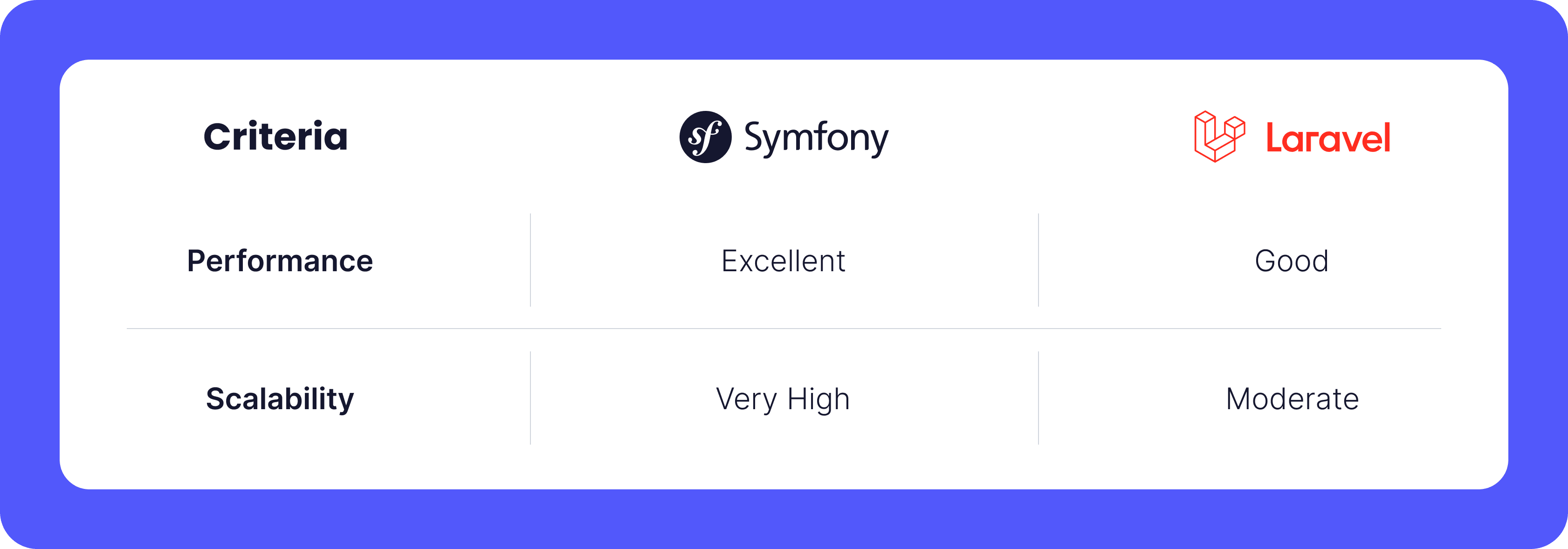
Symfony's modular architecture lets developers use only the necessary components, resulting in highly optimized, efficient applications. Symfony is built for performance, and its extensive caching capabilities boost speed. For scalability, Symfony excels at handling large-scale, enterprise-level applications because of its robustness and flexibility.
Laravel
While also performant, Laravel focuses more on developer experience than raw speed. However, Laravel isn't a slouch when it comes to performance. Its built-in tools, such as Eloquent ORM and Blade templating engine, streamline development without sacrificing efficiency. For scalability, Laravel can handle substantial projects, though it may require more tweaking and optimization than Symfony for extremely large applications.
Winner: Symfony is better for performance-critical and scalable applications.
2. Ease of use
Symfony
Symfony is often considered more complex because of its extensive features and configuration options. While this flexibility helps large-scale applications, it can overwhelm beginners. However, Symfony compensates with comprehensive documentation and a wealth of learning resources, including tutorials, books, and a vibrant community willing to help.
Laravel
Laravel is praised for its approachable learning curve, making it a favorite among newcomers to PHP frameworks. Its documentation is well-structured and easy to follow, and the Laravel community is welcoming and supportive. Additionally, Laravel offers a plethora of tutorials, including Laracasts, a popular platform with video tutorials that cover everything from basics to advanced topics.
Winner: Laravel is the go-to for ease of use, especially for less experienced developers.

3. Community support and resources
Symfony
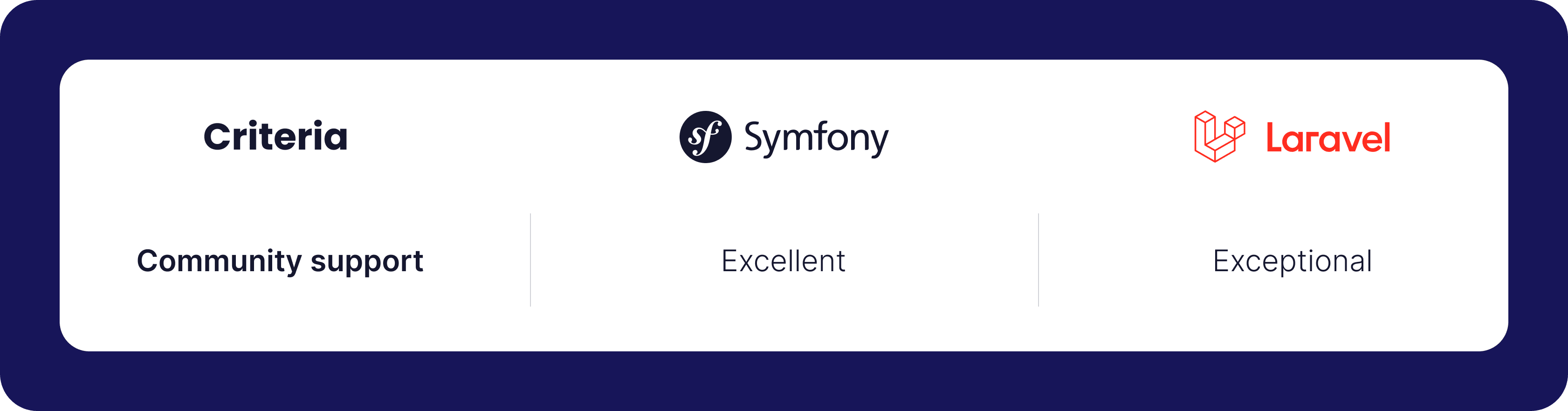
Symfony has a mature, extensive ecosystem. Many other PHP projects, including Drupal and Magento, rely on Symfony components, which speaks volumes about its reliability and flexibility. The Symfony community is large and active, contributing to a robust ecosystem of plugins and extensions.
Laravel
Laravel boasts one of the most active communities in the PHP ecosystem. Laravel has built a vibrant, enthusiastic community. Its ecosystem includes tools like Laravel Forge for server management, Laravel Vapor for serverless deployment, and Laravel Nova for administration dashboards. These tools and a myriad of third-party packages make Laravel a comprehensive framework covering a wide array of development needs.
Winner: Laravel edges out with a larger, more active community.
4. Security
Symfony
Symfony prioritizes security. The framework includes built-in security features such as protection against CSRF, XSS, and SQL injection attacks. Symfony's security component is highly configurable, allowing developers to implement robust authentication and authorization mechanisms tailored to their needs.
Laravel
Laravel also emphasizes security. It provides out-of-the-box solutions for common vulnerabilities, including CSRF protection, input sanitization, and secure password hashing. Laravel's easy-to-use authentication system makes secure login and registration straightforward.
Winner: Tie

5. Testing and debugging
Symfony
Symfony has robust support for testing and debugging. It integrates seamlessly with PHPUnit, offering tools to create and run tests efficiently. Symfony's profiler and debug toolbar provide valuable insights during development, helping to identify and fix issues quickly.
Laravel
Laravel also offers strong testing capabilities, integrating with PHPUnit and providing helper methods for easy application testing. Laravel Dusk stands out for browser automation testing, letting developers test user interactions in real browsers. The Laravel Debugbar is another useful tool for debugging and performance profiling.
Winner: Tie

6. Deployment and DevOps
Symfony
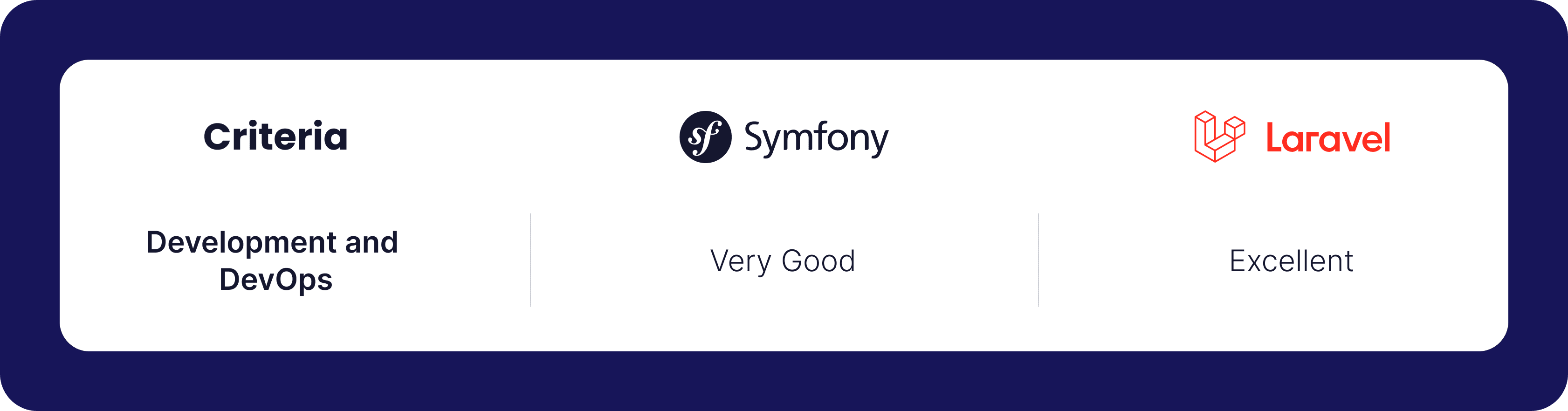
Symfony's deployment process is flexible and supports a variety of deployment strategies. Its support for environment configurations makes it easy to manage different development, testing, and production settings. Symfony also integrates well with continuous integration and deployment tools, streamlining the DevOps pipeline.
Laravel
Laravel simplifies deployment with tools like Laravel Forge and Laravel Vapor, making it easy to manage and scale applications. Laravel Envoyer is another tool designed for zero-downtime deployment, ensuring smooth updates without disrupting the user experience. These tools make Laravel a strong contender for modern DevOps practices.
Winner: Laravel
7. Built-in features and flexibility
Symfony
Symfony is a powerhouse of built-in features, providing a highly customizable environment. You can use its components independently in other projects, and its emphasis on best practices provides a solid foundation for any application. Symfony's flexibility allows developers to build anything from simple websites to complex enterprise systems.
Laravel
Laravel shines with its "batteries-included" philosophy, offering a rich set of built-in features for everyday development needs. Laravel makes features like authentication, authorization, and API handling easy to implement. Its expressive syntax and powerful tools, such as Artisan CLI and Eloquent ORM, make development a breeze.
Winner: Laravel

As the table shows, each framework has strengths depending on the category, making it suitable for different project needs.
Summary: Which one is better for what?
Here's a quick overview of how Symfony and Laravel compare in various vital aspects:
Category | Winner |
|---|---|
Performance & Scalability | Symfony |
Ease of Use | Laravel |
Community Support | Laravel |
Security | Tie |
Testing & Debugging | Tie |
Deployment & DevOps | Laravel |
Built-in Features | Laravel |
Choosing between Symfony and Laravel ultimately depends on your specific needs and preferences. If you value flexibility and scalability and are working on a large, enterprise-level project, Symfony might be the better choice. Its modular architecture and extensive features provide a solid foundation for complex applications.
On the other hand, if you prefer a framework with elegant syntax, a gentle learning curve, and robust built-in tools, Laravel is likely more appealing. Laravel's focus on developer experience and productivity makes it an excellent choice for applications ranging from small projects to large web systems.
Both Symfony and Laravel are exceptional frameworks with strengths and weaknesses. By understanding each's unique benefits, you can make an informed decision that aligns with your project requirements and development style.
Deciding between Symfony and Laravel boils down to the specific needs of your project:
Use Symfony if you're developing a high-load, complex application where performance, security, and flexibility are critical. It's ideal for enterprise applications and projects where long-term scalability matters.
Use Laravel if you need an easy-to-pick-up framework with rapid development capabilities and a vibrant support community. It's ideal for startups, small-to-medium-sized projects, and web applications where development speed and ease of use matter.
Both frameworks have their merits and can be the right choice depending on the project requirements. Symfony offers robustness for larger, more complex systems, while Laravel shines in user-friendly development and rapid application design. Choose based on what your project needs the most, and you won't be disappointed.
We work exclusively with top-tier professionals. Our writers and reviewers are carefully vetted professionals who ensure every piece of content is precise, relevant, and rooted in deep expertise.