"Jeg vil helt klart anbefale at arbejde med Proxify, når I udvikler et produkt, uanset om I skal opbygge et helt nyt team eller skalere et eksisterende. Proxify har de rette profiler til det."

Det største udviklernetværk i Europa
Ansæt senior og gennemprøvede FastAPI-udviklere
Brug mindre tid på rekruttering – og mere tid på at bygge gode produkter og fokuser på at opbygge gode produkter. Vi matcher dig med de bedste 1% af FastAPI-specialisterne, konsulenter, ingeniører, programmører og eksperter på få dage, ikke måneder.
ISO 27001
Certificeret

Find og engager FastAPI-udviklere hurtigt med Proxify
Proxify hjælper virksomheder med hurtigt at finde kvalitetssikrede FastAPI-udviklere med mindre risiko. Vi har matchet tech-specialister med både startups og globale virksomheder som Lufthansa, PwC og Education First. Kun omkring 1 % af ansøgerne bliver en del af vores netværk, og 94 % af de kandidater, vi præsenterer, fører til et vellykket match.
Hver FastAPI-udvikler gennemgår fem trin i vores kvalitetssikring, herunder AI-baseret screening, tests i engelsk og tekniske færdigheder, en samtale med fokus på soft skills samt et teknisk liveinterview med seniorudviklere.
Efter en 25-minutters indledende samtale modtager du en håndplukket shortlist med FastAPI-udviklere inden for gennemsnitligt 2 dage. Du forpligter dig ikke til noget, før du godkender et match, der er ingen lang bindingsperiode, og du har mulighed for at ansætte udvikler direkte.
Ansæt hurtigt med Proxify
Rolle:
Backend
Type:
Framework
Popularitet:
Lav
Proxifys sats:
Fra 239 kr./t
Få relevante kandidatmatch på cirka 2 dage
Opnå en matchsucces på 94%
Tal med en rekrutteringsekspert i FastAPI i dag
Sådan finder og ansætter du den rette FastAPI-specialist
Talentfulde FastAPI-udviklere tilgængelig nu

Omid K.
Python-udvikler
Turkey
Betroet medlem siden 2021
8 års erfaring
Omid er softwareingeniør og ph.d.-kandidat i datalogi med over 4 års erhvervserfaring. Han har arbejdet inden for e-handel, AI/ML og FinTech.
Ekspert i

Octavian I.
Backend-udvikler
Sweden
Betroet medlem siden 2026
8 års erfaring
En senior backenbudvikler med over 15 års kommerciel erfaring inden for design og opbygning af højtydende, sikre backendsystemer. Han specialiserer sig i Python, FastAPI, AWS, cloud-native mikroservices og DevOps-automatisering og leverer skalerbare løsninger til stærkt regulerede brancher.
Ekspert i

Giorgi B.
Data Scientist
Georgia
Betroet medlem siden 2023
6 års erfaring
Giorgi er en erfaren Senior Data Scientist med seks års erfaring, der har specialiseret sig i HR-teknologi, cloud-baserede POS-systemer, SaaS, cloud computing, e-handel og AI-teknologi.
Ekspert i

Ion M.
Backend-udvikler
Moldova, Republic of
Betroet medlem siden 2026
8 års erfaring
Ion er en backenbudvikler med over otte års kommerciel erfaring inden for opbygning af pålidelige, skalerbare backendsystemer ved hjælp af Python (Django, FastAPI), Go og Docker. Han specialiserer sig i design af mikroservices, RESTful API'er og distribuerede arkitekturer, der understøtter højtydende produktionsmiljøer.
Ekspert i

Georgios B.
Lead AI Engineer
Greece
Betroet medlem siden 2026
10 års erfaring
En ledende maskininlæringsingeniør med over 10 års kommerciel erfaring inden for design og implementering af AI-systemer i produktion, der specialiserer sig i naturlig sprogbehandling (NLP), store sprogmodeller (LLM) og generativ AI. Han har en ph.d. i NLP med fokus på finjustering af LLM og moderne transformerarkitekturer og har publiceret forskning i Springer, IEEE og IFIP.
Ekspert i

Fady B.
Fullstack-udvikler
Lebanon
Betroet medlem siden 2025
6 års erfaring
Fady er en Fullstack Developer med over seks års erfaring, med speciale i bygning skalerbare, backend-fokuserede webplatforme ved hjælp af Laravel, React, TypeScript, og SQL / NoSQL databaser.
Ekspert i

Tevos M.
Machine Learning Engineer
Armenia
Betroet medlem siden 2024
6 års erfaring
Tevos er en Machine Learning Engineering Tech Lead med over seks års erfaring, der specialiserer sig i design og implementering af realtids ML-pipelines og dyb læringsløsninger.
Ekspert i

Traian V.
Machine Learning Engineer
Romania
Betroet medlem siden 2025
6 års erfaring
Traian er en Senior Machine Learning Engineer med over syv års kommerciel erfaring med at levere AI-løsninger på tværs af kundesupport automatisering, computervision, naturlig sprogbehandling og generativ AI.
Ekspert i

Fathy R.
Python-udvikler
Egypt
Betroet medlem siden 2023
7 års erfaring
En Senior Python-udvikler med syv års professionel erfaring inden for opbygning af backendsystemer, datapipelines og AI-drevne platforme. Hans kerneteknologier inkluderer Django, FastAPI, Flask og AWS med fokus på skalerbare arkitekturer og automatisering.
Ekspert i
Omid K.
Python-udvikler
Turkey
Betroet medlem siden 2021
8 års erfaring
Omid er softwareingeniør og ph.d.-kandidat i datalogi med over 4 års erhvervserfaring. Han har arbejdet inden for e-handel, AI/ML og FinTech.
Ekspert i
FastAPI
Java
Python
MongoDB
ElasticSearch
Sådan finder og ansætter du den rette FastAPI-specialist
Tre trin til at finde den rette FastAPI-udvikler
Med en kombination af AI-teknologi og vores teams ekspertise leverer vi nøje udvalgte talenter på få dage.
Kickstart processen i tre enkle trin.
1
Book et møde

Book et 25-minutters møde, hvor du fortæller om dine behov, så matcher vi dig med velegnede kandidater.
2
Tjek dine kandidatmatches
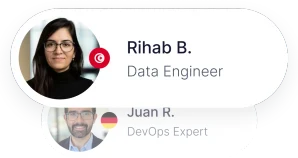
Efter cirka to dage modtager du en liste med nøje udvalgte tilgængelige specialister, som du kan booke en samtale med.
3
Start samarbejdet
Integrer dine nye teammedlemmer på maks. to uger. Vi tager os af HR og administration, så du ikke taber momentum.
Find FastAPI-udviklere
Ansæt førsteklasses, kontrolleret talent. Hurtigt.
Hvorfor kunder stoler på Proxify


"Vi kan stole på, at Proxify udvælger dygtige udviklere, som kan hjælpe os med at sætte fart på processen."


"Kandidaterne fra Proxify er i absolut topklasse."
Kun seniorfagfolk, der er grundigt screenet
Du slipper for CV-bunken. Vi har shortlistet de 1% bedste softwareingeniører i verden med ekspertise i over 1.000 teknologier og en gennemsnitlig erfaring på otte år. De er omhyggeligt screenet og kan starte med det samme."
Ansøgningsproces
Vi har en særdeles grundig screeningsproces. Proxify modtager over 20.000 ansøgninger om måneden fra udviklere, der ønsker at blive en del af vores netværk, men kun 2-3 % kommer gennem nåleøjet. Vi anvender et avanceret system til ansøgersporing, der vurderer erfaring, teknologi, prisniveau, geografisk placering og sprogfærdigheder.
Indledende samtale
Kandidaterne har en indledende samtale med en af vores rekrutteringsspecialister. Her får vi et billede af deres engelskkundskaber, bløde færdigheder, tekniske kompetencer, motivation, prisforventninger og tilgængelighed. Derudover afstemmer vi vores forventninger i henhold til efterspørgslen på deres færdigheder.
Vurdering
Næste trin er en programmeringstest, hvor kandidaten løser opgaver på tid. Opgaverne afspejler virkelige programmeringsopgaver, så vi kan teste deres evne til at løse problemer hurtigt og effektivt.
Live programmering
De bedste kandidater inviteres til en teknisk samtale. Her løser de programmeringsopgaver i realtid med vores erfarne ingeniører, hvor vi vurderer deres analytiske evner, tekniske kompetencer og problemløsningsevner i pressede situationer.
Proxify-medlem
Når kandidaten har klaret sig imponerende godt i alle de foregående trin, bliver vedkommende inviteret til at blive medlem af Proxify-netværket.

"Qualität steht im Mittelpunkt unserer Arbeit. Unser umfassender Bewertungsprozess stellt sicher, dass nur die besten 1% der Entwickler dem Proxify Netzwerk beitreten, sodass unsere Kunden immer die besten Talente zur Verfügung haben."
Stoyan Merdzhanov
VP Assessment
Mød dit drømmeteam

Petar Stojanovski
Kundeingeniør


 +40
+40 De sætter sig grundigt ind i dine tekniske udfordringer. Du får højt kvalificerede fagfolk, der hurtigt hjælper dig med at løse de vanskeligste udfordringer i din køreplan.

Teodor Månsson
Kundechef Nordics
Din langsigtede partner, der tilbyder personlig support i onboarding, HR og administration til at administrere dine Proxify udviklere.
Fremragende personlig service, der er skræddersyet fra start til slut – fordi du fortjener det.
A guide to help you hire FastAPI Developers
What is FastAPI?
Developed to combine performance with developer happiness, FastAPI brings together speed, modern Python typing, and automatic documentation generation. It's trusted by startups and large enterprises alike.
But building on FastAPI isn't just about creating a few endpoints; it demands architectural planning, asynchronous programming skills, dependency management, and deployment expertise.
Hiring the right FastAPI developer means launching robust, high-performance APIs that scale with your product.
What is FastAPI?
FastAPI is a modern, open-source, asynchronous web framework for building APIs with Python 3.7+ based on standard Python-type hints. It’s built on top of Starlette for the web parts and Pydantic for data validation.
What makes FastAPI special is its ability to automatically generate OpenAPI and Swagger documentation, built-in support for async/await, and tight integration with Python typing—all without sacrificing performance.
FastAPI is ideal for:
- Building RESTful APIs quickly and cleanly
- Asynchronous services (real-time systems, chat apps)
- Machine learning model serving
- Microservices in cloud-native architectures
- API-first applications with auto-generated docs
When do you need a FastAPI Developer?
You need a FastAPI developer when:
- You want to build or modernize APIs using Python;
- You need blazing-fast performance without the complexity of low-level frameworks;
- Your product relies on async data handling, streaming, or WebSockets;
- You’re developing ML services and need to serve predictions as APIs;
- You want built-in documentation without extra tooling.
What makes a great FastAPI Developer?
- Mastery of Python Type Hints & Pydantic, FastAPI relies heavily on type hints for request/response validation. Developers should:
- Use pydantic.BaseModel for request bodies and responses
- Validate nested data structures easily
- Catch bugs early through static typing
from pydantic import BaseModel

class User(BaseModel):
    id: int
    name: str
    email: str
- Asynchronous Programming with async def, FastAPI is async-first. Developers must:
- Write async def endpoints
- Handle async DB calls, HTTP requests, or file I/O
- Use httpx, asyncpg, or motor effectively
@app.get("/users/{user_id}")
async def get_user(user_id: int):
    user = await fetch_user_from_db(user_id)
    return user
Dependency Injection, FastAPI’s Depends system is powerful and modular. Great developers:
- Abstract database sessions, auth checks, or service logic
- Reuse dependencies elegantly
from fastapi import Depends

def get_db():
    db = create_db_session()
    try:
        yield db
    finally:
db.close()- API Documentation & testing, FastAPI generates Swagger docs out of the box. Developers should:
- Leverage response_model for clarity
- Use built-in docs for client-side integration
- Write tests using TestClient
from fastapi.testclient import TestClient

client = TestClient(app)

def test_read_root():
    response = client.get("/")
assert response.status_code == 200- Security & Authentication, FastAPI supports OAuth2, JWT, and API keys. A solid developer:
- Implements secure password hashing and token auth
- Uses OAuth2PasswordBearer, Depends, and security schemes
- Deployment & DevOps Familiarity
FastAPI is production-grade when deployed well. Ideal candidates:
- Use uvicorn with gunicorn
- Write Dockerfiles for containerization
- Deploy to AWS, GCP, or Azure using CI/CD
Nice-to-haves
- WebSocket handling (real-time apps)
- Background tasks (e.g., email, logging)
- GraphQL via Strawberry or Ariadne
- Caching strategies (Redis, FastAPI-limiter)
- Experience with ORMs (SQLAlchemy, Tortoise)
Common mistakes FastAPI Developers make
Ignoring async
Using blocking calls (like synchronous database drivers or requests) inside async def routes defeats the purpose of FastAPI’s asynchronous architecture. This leads to thread blocking, slow response times, and poor scalability under load.
Overusing globals
Relying on global variables or singletons for database sessions, configs, or user state instead of using FastAPI’s Depends() system makes the code harder to test, scale, and maintain. It also increases the risk of side effects in concurrent environments.
Poor validation
Skipping Pydantic models for request bodies or manually parsing JSON leads to brittle APIs that are prone to runtime errors, unclear documentation, and increased bug surface area.
Misconfiguring CORS or security headers
Leaving out proper CORS middleware or failing to configure allowed_origins, authentication headers, or HTTPS-only settings opens the API to security vulnerabilities and cross-origin issues—especially in frontend-facing services.
Sample interview questions (with real answers)
Q1. What’s the benefit of using Pydantic in FastAPI?
A: Pydantic enables automatic data validation and parsing using Python-type hints. It improves reliability and reduces manual checks.
Q2. How would you handle authentication in FastAPI?
A: Use OAuth2PasswordBearer, secure password hashing (passlib), and JWT tokens for stateless sessions.
Q3. How does FastAPI handle async operations?
A: FastAPI uses async def routes and is built on Starlette’s async ASGI architecture. You can integrate with async DB drivers, HTTP clients, or event loops.
Q4. How do you structure a large FastAPI app?
A: By modularizing routers, using APIRouter, separating models, services, and schemas, and registering routers in main.py.
Q5. How would you implement versioning in FastAPI?
A: Mount separate routers under different prefixes (/v1, /v2) using APIRouter.
Q6. How does FastAPI handle request validation errors?
A: FastAPI automatically returns a 422 Unprocessable Entity response with a detailed JSON error message if the request body or parameters fail Pydantic validation.
Q7. How can you document your API in FastAPI?
A: FastAPI auto-generates interactive Swagger UI and ReDoc documentation from Python type hints, Pydantic models, and route annotations.
Q8. How do you add middleware in FastAPI?
A: You can use the @app.middleware("http") decorator to define custom middleware functions, or add third-party middleware using add_middleware().
Q9. How do you handle background tasks in FastAPI?
A: Use the BackgroundTasks parameter in route functions to execute tasks after sending a response, ideal for sending emails or logging asynchronously.
Q10. How do you test FastAPI applications?
A: Use Python’s unittest or pytest along with TestClient from fastapi.testclient to simulate requests and test endpoints.
How to future-proof your FastAPI stack
-
Use strict typing everywhere, it pays off long-term Leveraging Python's type hints makes your code more readable, debuggable, and IDE-friendly. FastAPI uses these types to auto-generate docs and perform data validation, reducing runtime errors and improving developer onboarding.
-
Write comprehensive OpenAPI docs via response_model Always define response_model for endpoints to ensure clients receive well-documented and predictable data structures. This enhances API discoverability and enables frontend teams or third-party users to integrate confidently without additional clarification.
-
Use dependency injection instead of globals FastAPI’s Depends() system allows for clean separation of concerns, better testability, and safer concurrent request handling. By avoiding a global state, you reduce bugs and improve scalability in multi-user, multi-threaded environments.
-
Embrace async-native libraries and avoid blocking code Stick with async-compatible libraries like httpx, asyncpg, or motor to fully leverage FastAPI’s non-blocking nature. Blocking code in async routes will slow down your entire application under load, even with a lightweight ASGI server.
-
Containerize with Docker and version APIs cleanly Use Docker to ensure consistency across environments, and structure your application with clear API versioning (/v1, /v2, etc.) to prevent breaking changes. This approach simplifies CI/CD pipelines and allows you to iterate without disrupting existing clients.
Common use cases by industry
Fintech
Use case: High-speed transactional APIs, fraud scoring endpoints Example: A digital bank using FastAPI to serve customer balance lookups and fraud alerts asynchronously.
Healthcare
Use case: Patient record APIs, scheduling systems Example: A telemedicine platform exposing appointment booking and health summaries through FastAPI.
eCommerce
Use case: Product listings, order tracking, inventory sync Example: A marketplace platform using FastAPI to expose product and inventory APIs to sellers and third-party tools.
AI/ML
Use case: Model inference and data preprocessing APIs Example: A startup exposing machine learning models via /predict endpoints in FastAPI, accepting JSON payloads and returning predictions.
SaaS & Internal tools
Use case: Dashboards, integrations, internal APIs Example: A CRM product using FastAPI to connect frontend dashboards with backend analytics and account systems.
Red flags in FastAPI resumes
- Uses blocking libraries inside async code
- No mention of Pydantic or dependency injection
- Relies only on Swagger, with no tests or monitoring setup
- Hardcoded configuration or poor separation of concerns
- No experience with deployment or containerization
Why hiring a Fast API Developer pays off
- Better developer velocity: FastAPI allows building clean, well-typed APIs quickly, reducing bugs and rewrites.
- Modern tech stack: Async-first, built-in docs, type safety, all modern backend essentials baked in.
- Production readiness: FastAPI scales well and plays nicely with Docker, Kubernetes, and cloud providers.
- Secure by design: With OAuth2, CORS handling, and Pydantic validation, security is baked into the framework.
- Happy dev teams: Engineers enjoy working with FastAPI—it’s expressive, clean, and minimizes boilerplate.
Hiring challenges
-
Python developers may not know async or type hints While many developers are fluent in Python, fewer have hands-on experience with async def or Python’s type system, which are core to writing performant and safe FastAPI code.
-
Misuse of blocking I/O in async routes can tank performance Using libraries like requests or synchronous ORMs inside async endpoints introduces hidden bottlenecks, nullifying the benefits of FastAPI’s async-first design.
-
Few developers structure apps cleanly with routers and DI Many small projects are written as monoliths in main.py, but scalable FastAPI apps require thoughtful modularization using APIRouter and proper dependency injection patterns.
-
Documentation features are often underused or misused Developers may neglect to define response_model, tags, or parameter descriptions, resulting in poorly documented APIs despite FastAPI’s auto-generated Swagger support.
Summary: Hire the right talent
FastAPI has become the go-to framework for modern, high-performance Python APIs. Its speed, developer experience, and production readiness make it an excellent choice for backend services in startups and enterprise products alike.
But to unlock its full power, you need someone who understands more than just the syntax. You need a developer who knows how to build scalable architectures, write clean async code, manage dependencies, and deploy production-ready APIs.
By hiring a strong FastAPI developer, you set your team up for faster development, cleaner code, and a more maintainable product now or in the future.
Ansætter en FastAPI-udviklere?
Find FastAPI-udviklere
Håndplukkede FastAPI eksperter med dokumenterede resultater, betroet af globale virksomheder.
Verificeret forfatter
Vi arbejder udelukkende med top-tier professionelle. Vores skribenter og anmeldere er omhyggeligt verificerede brancheeksperter fra Proxify-netværket, som sikrer, at hvert indhold er præcist, relevant og baseret på dyb ekspertise.

Mahmudul Hasan
DevOps Engineer
Mahmudul is a skilled DevOps Engineer with 8 years of experience, specializing in cloud deployment and SaaS platforms. He is proficient in AWS, Terraform, Ansible, Kubernetes, GCP, and Digital Ocean, enabling seamless infrastructure management and optimization.
Relaterede artikler
Har du spørgsmål om at ansætte en FastAPI-udvikler?
Udforsk flere færdigheder
Rolle
Softwareteknik
Data and artificial Intelligence
Cloud og infrastruktur
Kvalitetssikring
Design
Betroet af 2.500 globale virksomheder