"Ik zou Proxify zeker aanraden wanneer je een product bouwt, of je nu een volledig nieuw team samenstelt of een bestaand team opschaalt. Proxify heeft daarvoor de juiste mensen."

Het grootste netwerk van Europa voor tech-experts
Huur senior en gescreende FastAPI-ontwikkelaars in
Stop met het verspillen van tijd en geld op verkeerde mensen en focus op het bouwen van geweldige producten. We koppelen jou met de top 1% FastAPI freelance ontwikkelaars, consultants, engineers, programmeurs en experts binnen enkele dagen, geen maanden.
ISO 27001-
certificaat

Huur FastAPI-ontwikkelaars snel in met Proxify
Proxify helpt bedrijven om gescreende FastAPI-ontwikkelaars snel en met minder risico in te huren. We hebben techprofessionals gekoppeld aan zowel startups als internationale ondernemingen zoals Lufthansa, PwC en Education First. Slechts ongeveer 1% van de sollicitanten wordt toegelaten tot ons netwerk en 94% van de kandidaten die we voorstellen, wordt succesvol gematcht.
Alle FastAPI-ontwikkelaars doorlopen vijf selectiefases, waaronder AI-ondersteunde screening, assessments voor Engels en technische vaardigheden, een soft-skillsinterview en een live technisch interview met senior engineers.
Na een kennismakingsgesprek van 25 minuten ontvang je binnen gemiddeld 2 dagen een zorgvuldig samengestelde shortlist met FastAPI-ontwikkelaars. Je zit nergens aan vast totdat je een match goedkeurt, er is geen langdurige contractuele verplichting en je hebt de mogelijkheid om ontwikkelaar op je eigen loonlijst over te nemen.
Snel inhuren met Proxify
Rol:
Backend
Type:
Framework
Populariteit:
Laag
Proxify-tarief:
Vanaf € 31,90/h
Word gekoppeld in 2 dagen
Huur met 94% overeenstemming succes
Praat vandaag nog met een FastAPI aanwervingsdeskundige
De ultieme gids voor aannemen: vind en huur een top FastAPI Expert in
Getalenteerde FastAPI-ontwikkelaars nu beschikbaar

Omid K.
Python Developer
Turkey
Vertrouwd lid sinds 2021
8 jaar ervaring
Omid is een software engineer en promovendus in computerwetenschappen met meer dan 4 jaar professionele ervaring. Hij heeft gewerkt in eCommerce, AI/ML en FinTech.
Expert in

Octavian I.
Backend-ontwikkelaar
Sweden
Vertrouwd lid sinds 2026
8 jaar ervaring
Een senior backendontwikkelaar met meer dan 15 jaar commerciële ervaring in het ontwerpen en bouwen van hoogwaardige, veilige backendsystemen. Hij is gespecialiseerd in Python, FastAPI, AWS, cloud-native microservices en DevOps-automatisering en levert schaalbare oplossingen voor sterk gereguleerde sectoren.
Expert in

Giorgi B.
Data Scientist
Georgia
Vertrouwd lid sinds 2023
6 jaar ervaring
Giorgi is een doorgewinterde Senior Data Scientist met zes jaar ervaring, gespecialiseerd in HR-technologie, cloud-gebaseerde POS-systemen, SaaS, cloud computing, e-commerce en AI-technologie.
Expert in

Ion M.
Backend-ontwikkelaar
Moldova, Republic of
Vertrouwd lid sinds 2026
8 jaar ervaring
Ion is een backendontwikkelaar met meer dan acht jaar commerciële ervaring in het bouwen van betrouwbare, schaalbare backendsystemen met Python (Django, FastAPI), Go en Docker. Hij is gespecialiseerd in het ontwerpen van microservices, RESTful API's en gedistribueerde architecturen die high-performance productieomgevingen ondersteunen.
Expert in

Georgios B.
Lead AI Engineer
Greece
Vertrouwd lid sinds 2026
10 jaar ervaring
Een Lead Machine Learning Engineer met meer dan 10 jaar commerciële ervaring in het ontwerpen en implementeren van AI-systemen in productie, gespecialiseerd in Natural Language Processing (NLP), Large Language Models (LLM's) en Generative AI. Hij heeft een PhD in NLP gericht op LLM fine-tuning en moderne transformerarchitecturen en heeft onderzoek gepubliceerd in Springer, IEEE en IFIP.
Expert in

Fady B.
Fullstack-ontwikkelaar
Lebanon
Vertrouwd lid sinds 2025
6 jaar ervaring
Fady is een Fullstack Developer met meer dan zes jaar ervaring, gespecialiseerd in het bouwen van schaalbare, backend-gebaseerde webplatforms met behulp van Laravel, React, TypeScript, en SQL/NoSQL databases.
Expert in

Tevos M.
Machine Learning Engineer
Armenia
Vertrouwd lid sinds 2024
6 jaar ervaring
Tevos is een Machine Learning Engineering Tech Lead met meer dan zes jaar ervaring, gespecialiseerd in het ontwerp en de implementatie van real-time ML-pijplijnen en deep learning-oplossingen.
Expert in

Traian V.
Machine Learning Engineer
Romania
Vertrouwd lid sinds 2025
6 jaar ervaring
Traian is een Senior Machine Learning Engineer met meer dan zeven jaar commerciële ervaring die AI oplossingen levert over de klantenondersteuning automatisering, computerzicht, natuurlijke taalverwerking en generatieve AI.
Expert in

Fathy R.
Python Developer
Egypt
Vertrouwd lid sinds 2023
7 jaar ervaring
Een Senior Python-ontwikkelaar met zeven jaar professionele ervaring in het bouwen van backendsystemen, datapipelines en AI-aangedreven platformen. Zijn kernstack omvat Django, FastAPI, Flask en AWS, met een focus op schaalbare architecturen en automatisering.
Expert in
Omid K.
Python Developer
Turkey
Vertrouwd lid sinds 2021
8 jaar ervaring
Omid is een software engineer en promovendus in computerwetenschappen met meer dan 4 jaar professionele ervaring. Hij heeft gewerkt in eCommerce, AI/ML en FinTech.
Expert in
FastAPI
Java
Python
MongoDB
ElasticSearch
De ultieme gids voor aannemen: vind en huur een top FastAPI Expert in
Drie stappen naar jouw perfecte FastAPI-ontwikkelaar
We combineren het beste van AI met de diepgaande expertise van ons team.
Begin eenvoudig in drie stappen.
1
Videocall inplannen
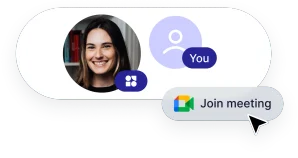
Laat ons weten wat je precies nodig hebt, zodat we perfecte kandidaten kunnen voordragen.
2
De kandidaten bekijken
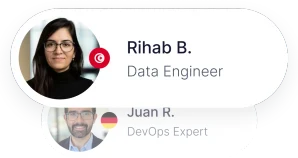
Binnen gemiddeld 2 dagen krijg je een selectie met zorgvuldig gekozen, direct inzetbare kandidaten met wie je meteen een gesprek kunt inplannen.
3
Samen aan de slag
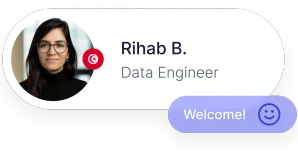
Je nieuwe teamleden kunnen binnen twee weken aan de slag. Wij zorgen dat alles snel en goed geregeld wordt.
Vind FastAPI-ontwikkelaars
Huur top techtalent in gescreend en snel beschikbaar.
Waarom klanten Proxify vertrouwen


"We kunnen erop vertrouwen dat Proxify goede developers selecteert die ons helpen het proces te versnellen."


"Kandidaterne fra Proxify er i absolut topklasse."
Alleen senior talent, zorgvuldig geselecteerd
Vergeet die stapel cv's. Ons netwerk bestaat alleen uit de beste software engineers: de top 1% wereldwijd, met gemiddeld acht jaar ervaring in meer dan 1.000 techcompetenties. Zorgvuldig geselecteerd en direct inzetbaar."
Aanmeldingstraject
Onze selectie is een van de strengste in de sector. Iedere maand melden meer dan 20.000 developers zich aan voor ons netwerk, maar slechts 2 tot 3% wordt toegelaten. Iedereen die zich aanmeldt wordt eerst beoordeeld via ons Applicant Tracking System. Hierbij letten we op zaken als het aantal jaar ervaring, tech-stack, tarieven, locatie en Engelse taalvaardigheid.
Beoordelingsgesprek
De techtalenten die door de eerste ronde komen, gaan in gesprek met onze recruiters. Hier gaan we dieper in op hun Engelse taalvaardigheid, sociale vaardigheden, technische capaciteiten, motivatie, tarieven en beschikbaarheid. Ook houden we rekening met de vraag en het aanbod van hun specifieke skills op de markt.
Assessment
De assessment die volgt na het gesprek richt zich op praktijkgerichte coderingsuitdagingen en bugfixes, met een tijdslimiet om te beoordelen hoe kandidaten presteren onder druk. De test weerspiegelt het type werk dat zij voor onze klanten zullen uitvoeren, zodat we zeker weten dat ze over de juiste expertise beschikken.
Technisch interview
Techtalenten die slagen voor de assessment gaan door naar het technische interview met onze senior engineers. Tijdens dit gesprek werken ze aan codeeropdrachten en lossen ze ter plekke problemen op. Zo krijgen we goed inzicht in hun technische vaardigheden, probleemoplossend vermogen en manier van denken bij complexe vraagstukken.
Welkom bij Proxify
Wanneer iemand alle voorgaande stappen met succes doorloopt, wordt deze persoon toegelaten tot het Proxify-netwerk.

"Alles draait bij ons om kwaliteit. Door onze zorgvuldige selectie wordt slechts 1% van de developers toegelaten tot het Proxify-netwerk, zodat onze klanten altijd het beste talent krijgen."
Stoyan Merdzhanov
VP Assessment
Er staat een team voor je klaar

Petar Stojanovski
Client Engineer


 +40
+40 Onze client engineers brengen de technische uitdagingen van je bedrijf nauwkeurig in kaart. Met deze kennis en hun expertise koppelen ze je bedrijf snel aan de juiste techprofessionals.

Cheryl Engels
Klantmanager Benelux
Onze klantmanagers helpen je bedrijf bij de onboarding en bieden persoonlijke ondersteuning op lange termijn.
Persoonlijke service op maat, bij elke stap. Zo krijgt je bedrijf wat het nodig heeft.
A guide to help you hire FastAPI Developers
What is FastAPI?
Developed to combine performance with developer happiness, FastAPI brings together speed, modern Python typing, and automatic documentation generation. It's trusted by startups and large enterprises alike.
But building on FastAPI isn't just about creating a few endpoints; it demands architectural planning, asynchronous programming skills, dependency management, and deployment expertise.
Hiring the right FastAPI developer means launching robust, high-performance APIs that scale with your product.
What is FastAPI?
FastAPI is a modern, open-source, asynchronous web framework for building APIs with Python 3.7+ based on standard Python-type hints. It’s built on top of Starlette for the web parts and Pydantic for data validation.
What makes FastAPI special is its ability to automatically generate OpenAPI and Swagger documentation, built-in support for async/await, and tight integration with Python typing—all without sacrificing performance.
FastAPI is ideal for:
- Building RESTful APIs quickly and cleanly
- Asynchronous services (real-time systems, chat apps)
- Machine learning model serving
- Microservices in cloud-native architectures
- API-first applications with auto-generated docs
When do you need a FastAPI Developer?
You need a FastAPI developer when:
- You want to build or modernize APIs using Python;
- You need blazing-fast performance without the complexity of low-level frameworks;
- Your product relies on async data handling, streaming, or WebSockets;
- You’re developing ML services and need to serve predictions as APIs;
- You want built-in documentation without extra tooling.
What makes a great FastAPI Developer?
- Mastery of Python Type Hints & Pydantic, FastAPI relies heavily on type hints for request/response validation. Developers should:
- Use pydantic.BaseModel for request bodies and responses
- Validate nested data structures easily
- Catch bugs early through static typing
from pydantic import BaseModel

class User(BaseModel):
    id: int
    name: str
    email: str
- Asynchronous Programming with async def, FastAPI is async-first. Developers must:
- Write async def endpoints
- Handle async DB calls, HTTP requests, or file I/O
- Use httpx, asyncpg, or motor effectively
@app.get("/users/{user_id}")
async def get_user(user_id: int):
    user = await fetch_user_from_db(user_id)
    return user
Dependency Injection, FastAPI’s Depends system is powerful and modular. Great developers:
- Abstract database sessions, auth checks, or service logic
- Reuse dependencies elegantly
from fastapi import Depends

def get_db():
    db = create_db_session()
    try:
        yield db
    finally:
db.close()- API Documentation & testing, FastAPI generates Swagger docs out of the box. Developers should:
- Leverage response_model for clarity
- Use built-in docs for client-side integration
- Write tests using TestClient
from fastapi.testclient import TestClient

client = TestClient(app)

def test_read_root():
    response = client.get("/")
assert response.status_code == 200- Security & Authentication, FastAPI supports OAuth2, JWT, and API keys. A solid developer:
- Implements secure password hashing and token auth
- Uses OAuth2PasswordBearer, Depends, and security schemes
- Deployment & DevOps Familiarity
FastAPI is production-grade when deployed well. Ideal candidates:
- Use uvicorn with gunicorn
- Write Dockerfiles for containerization
- Deploy to AWS, GCP, or Azure using CI/CD
Nice-to-haves
- WebSocket handling (real-time apps)
- Background tasks (e.g., email, logging)
- GraphQL via Strawberry or Ariadne
- Caching strategies (Redis, FastAPI-limiter)
- Experience with ORMs (SQLAlchemy, Tortoise)
Common mistakes FastAPI Developers make
Ignoring async
Using blocking calls (like synchronous database drivers or requests) inside async def routes defeats the purpose of FastAPI’s asynchronous architecture. This leads to thread blocking, slow response times, and poor scalability under load.
Overusing globals
Relying on global variables or singletons for database sessions, configs, or user state instead of using FastAPI’s Depends() system makes the code harder to test, scale, and maintain. It also increases the risk of side effects in concurrent environments.
Poor validation
Skipping Pydantic models for request bodies or manually parsing JSON leads to brittle APIs that are prone to runtime errors, unclear documentation, and increased bug surface area.
Misconfiguring CORS or security headers
Leaving out proper CORS middleware or failing to configure allowed_origins, authentication headers, or HTTPS-only settings opens the API to security vulnerabilities and cross-origin issues—especially in frontend-facing services.
Sample interview questions (with real answers)
Q1. What’s the benefit of using Pydantic in FastAPI?
A: Pydantic enables automatic data validation and parsing using Python-type hints. It improves reliability and reduces manual checks.
Q2. How would you handle authentication in FastAPI?
A: Use OAuth2PasswordBearer, secure password hashing (passlib), and JWT tokens for stateless sessions.
Q3. How does FastAPI handle async operations?
A: FastAPI uses async def routes and is built on Starlette’s async ASGI architecture. You can integrate with async DB drivers, HTTP clients, or event loops.
Q4. How do you structure a large FastAPI app?
A: By modularizing routers, using APIRouter, separating models, services, and schemas, and registering routers in main.py.
Q5. How would you implement versioning in FastAPI?
A: Mount separate routers under different prefixes (/v1, /v2) using APIRouter.
Q6. How does FastAPI handle request validation errors?
A: FastAPI automatically returns a 422 Unprocessable Entity response with a detailed JSON error message if the request body or parameters fail Pydantic validation.
Q7. How can you document your API in FastAPI?
A: FastAPI auto-generates interactive Swagger UI and ReDoc documentation from Python type hints, Pydantic models, and route annotations.
Q8. How do you add middleware in FastAPI?
A: You can use the @app.middleware("http") decorator to define custom middleware functions, or add third-party middleware using add_middleware().
Q9. How do you handle background tasks in FastAPI?
A: Use the BackgroundTasks parameter in route functions to execute tasks after sending a response, ideal for sending emails or logging asynchronously.
Q10. How do you test FastAPI applications?
A: Use Python’s unittest or pytest along with TestClient from fastapi.testclient to simulate requests and test endpoints.
How to future-proof your FastAPI stack
-
Use strict typing everywhere, it pays off long-term Leveraging Python's type hints makes your code more readable, debuggable, and IDE-friendly. FastAPI uses these types to auto-generate docs and perform data validation, reducing runtime errors and improving developer onboarding.
-
Write comprehensive OpenAPI docs via response_model Always define response_model for endpoints to ensure clients receive well-documented and predictable data structures. This enhances API discoverability and enables frontend teams or third-party users to integrate confidently without additional clarification.
-
Use dependency injection instead of globals FastAPI’s Depends() system allows for clean separation of concerns, better testability, and safer concurrent request handling. By avoiding a global state, you reduce bugs and improve scalability in multi-user, multi-threaded environments.
-
Embrace async-native libraries and avoid blocking code Stick with async-compatible libraries like httpx, asyncpg, or motor to fully leverage FastAPI’s non-blocking nature. Blocking code in async routes will slow down your entire application under load, even with a lightweight ASGI server.
-
Containerize with Docker and version APIs cleanly Use Docker to ensure consistency across environments, and structure your application with clear API versioning (/v1, /v2, etc.) to prevent breaking changes. This approach simplifies CI/CD pipelines and allows you to iterate without disrupting existing clients.
Common use cases by industry
Fintech
Use case: High-speed transactional APIs, fraud scoring endpoints Example: A digital bank using FastAPI to serve customer balance lookups and fraud alerts asynchronously.
Healthcare
Use case: Patient record APIs, scheduling systems Example: A telemedicine platform exposing appointment booking and health summaries through FastAPI.
eCommerce
Use case: Product listings, order tracking, inventory sync Example: A marketplace platform using FastAPI to expose product and inventory APIs to sellers and third-party tools.
AI/ML
Use case: Model inference and data preprocessing APIs Example: A startup exposing machine learning models via /predict endpoints in FastAPI, accepting JSON payloads and returning predictions.
SaaS & Internal tools
Use case: Dashboards, integrations, internal APIs Example: A CRM product using FastAPI to connect frontend dashboards with backend analytics and account systems.
Red flags in FastAPI resumes
- Uses blocking libraries inside async code
- No mention of Pydantic or dependency injection
- Relies only on Swagger, with no tests or monitoring setup
- Hardcoded configuration or poor separation of concerns
- No experience with deployment or containerization
Why hiring a Fast API Developer pays off
- Better developer velocity: FastAPI allows building clean, well-typed APIs quickly, reducing bugs and rewrites.
- Modern tech stack: Async-first, built-in docs, type safety, all modern backend essentials baked in.
- Production readiness: FastAPI scales well and plays nicely with Docker, Kubernetes, and cloud providers.
- Secure by design: With OAuth2, CORS handling, and Pydantic validation, security is baked into the framework.
- Happy dev teams: Engineers enjoy working with FastAPI—it’s expressive, clean, and minimizes boilerplate.
Hiring challenges
-
Python developers may not know async or type hints While many developers are fluent in Python, fewer have hands-on experience with async def or Python’s type system, which are core to writing performant and safe FastAPI code.
-
Misuse of blocking I/O in async routes can tank performance Using libraries like requests or synchronous ORMs inside async endpoints introduces hidden bottlenecks, nullifying the benefits of FastAPI’s async-first design.
-
Few developers structure apps cleanly with routers and DI Many small projects are written as monoliths in main.py, but scalable FastAPI apps require thoughtful modularization using APIRouter and proper dependency injection patterns.
-
Documentation features are often underused or misused Developers may neglect to define response_model, tags, or parameter descriptions, resulting in poorly documented APIs despite FastAPI’s auto-generated Swagger support.
Summary: Hire the right talent
FastAPI has become the go-to framework for modern, high-performance Python APIs. Its speed, developer experience, and production readiness make it an excellent choice for backend services in startups and enterprise products alike.
But to unlock its full power, you need someone who understands more than just the syntax. You need a developer who knows how to build scalable architectures, write clean async code, manage dependencies, and deploy production-ready APIs.
By hiring a strong FastAPI developer, you set your team up for faster development, cleaner code, and a more maintainable product now or in the future.
Huur een FastAPI-ontwikkelaars?
Vind FastAPI-ontwikkelaars
Handgeselecteerde FastAPI-experts met bewezen staat van dienst, vertrouwd door wereldwijde bedrijven.
Gecontroleerde auteur
We werken uitsluitend met topprofessionals. Onze schrijvers en beoordelaars zijn zorgvuldig geselecteerde industrie-experts uit het Proxify-netwerk die ervoor zorgen dat elk stuk inhoud nauwkeurig, relevant en geworteld is in diepgaande expertise.

Mahmudul Hasan
DevOps Engineer
Mahmudul is a skilled DevOps Engineer with 8 years of experience, specializing in cloud deployment and SaaS platforms. He is proficient in AWS, Terraform, Ansible, Kubernetes, GCP, and Digital Ocean, enabling seamless infrastructure management and optimization.
Gerelateerde artikelen
Heb je een vraag over het inhuren van een FastAPI-ontwikkelaar?
Verken meer vaardigheden
Rol
Softwareproduct-engineering
Cloud en infrastructuur
Kwaliteitsborging
Design
Partner van meer dan 2.500 bedrijven wereldwijd