"Je recommande vivement de travailler avec Proxify lorsque vous développez un produit, qu’il s’agisse de constituer une toute nouvelle équipe ou de renforcer une équipe existante. Proxify dispose des bons profils pour cela."


Le plus grand réseau de développeurs en Europe
Arrêtez de perdre du temps et de l'argent avec de mauvais développeurs BigQuery et concentrez-vous sur la création d'excellents produits. Nous vous mettons en relation avec les 1% des développeurs, consultants, ingénieurs, programmeurs et experts freelance les plus performants en l’espace de quelques jours, et non en quelques mois.
ISO 27001
Certifié

Proxify aide les entreprises à recruter rapidement des Développeurs BigQuery rigoureusement évalués, tout en réduisant les risques. Nous avons mis en relation des professionnels de la tech avec des startups comme avec de grands groupes internationaux tels que Lufthansa, PwC et Education First. Seuls environ 1 % des candidats intègrent notre réseau, et 94 % des profils que nous présentons aboutissent à un match réussi.
Chaque Développeur BigQuery passe par cinq étapes de sélection, comprenant un screening assisté par l’IA, des évaluations en anglais et des compétences techniques, un entretien axé sur les soft skills ainsi qu’un entretien technique en direct avec des ingénieurs seniors.
Après un appel découverte de 25 minutes, vous recevez dans un délai moyen de 2 jours une shortlist où figurent des Développeurs BigQuery sélectionnés avec soin. Vous ne prenez aucun engagement avant d’avoir validé un match, aucune durée minimale d’engagement n’est imposée, et vous avez la possibilité d’intégrer développeur directement à vos effectifs.
Embauchez rapidement avec Proxify
Le guide ultime de recrutement : trouver et embaucher un expert en BigQuery de premier plan

Data Scientist
Emil est un data scientist et PhD.C. accompli avec quatre ans d'expérience dans le secteur informatique, travaillant principalement sur l'apprentissage automatique, la recherche, les statistiques et les outils de données.
Expert en

Data Engineer
Gopal est un ingénieur de données avec plus de huit ans d'expérience dans des secteurs réglementés tels que l'automobile, la technologie et l'énergie. Il excelle dans GCP, Azure, AWS et Snowflake, avec une expertise dans le développement du cycle de vie complet, la modélisation des données, l'architecture des bases de données et l'optimisation des performances.
Expert en

Data Engineer
Marley est un ingénieur de données avec plus de sept ans d'expérience commerciale. Il possède une grande expérience de Python, Apache Spark, SQL et des technologies cloud telles que AWS et GCP.
Expert en

Data Architect
Sergio est un architecte de données expérimenté avec plus d'une décennie d'expertise dans la conception et la fourniture de solutions de données d'entreprise. Il est spécialisé dans le langage SQL, la gouvernance des données et la qualité des données, avec une solide expérience dans la mise en œuvre de cadres d'architecture de données évolutifs qui soutiennent l'intelligence économique et la conformité.
Expert en

Data Engineer
Moaz est un ingénieur de données hautement qualifié qui possède une vaste expérience de cinq ans.
Expert en

Data Scientist
Samuel est un professionnel compétent en matière de données et d'intelligence économique, avec cinq ans d'expérience dans les secteurs des télécommunications, du conseil et des sciences de la vie. Titulaire d'un doctorat en statistiques, il associe une expertise en modélisation avancée à une expérience pratique de l'industrie, comblant ainsi efficacement le fossé entre les analyses complexes et les informations commerciales exploitables.
Expert en

Data Engineer
Alper est un ingénieur de données avec 20 ans d'expérience, y compris l'expertise dans SQL Server, Oracle, et les solutions de données en nuage. Au cours des cinq dernières années, il s'est spécialisé en tant qu'ingénieur de données AWS, utilisant Python, AWS Glue, PySpark et SQLMesh pour concevoir et optimiser des pipelines de données efficaces.
Expert en

Data Engineer
Mehmet est un ingénieur en données compétent qui a cinq ans d'expérience dans les secteurs de la finance, des télécommunications et du commerce électronique en Turquie.
Expert en

Développeur de Business Intelligence
Andrés est un développeur de Business Intelligence avec plus de sept ans d'expérience commerciale, spécialisé dans SQL, Tableau, Looker, et la modélisation de données avancées. Ses solides bases techniques en Airflow, GCP et Python font de lui un contributeur précieux à des initiatives BI complexes.
Expert en
Data Scientist
Emil est un data scientist et PhD.C. accompli avec quatre ans d'expérience dans le secteur informatique, travaillant principalement sur l'apprentissage automatique, la recherche, les statistiques et les outils de données.
Expert en
Le guide ultime de recrutement : trouver et embaucher un expert en BigQuery de premier plan
We combine best of AI-technology and our team’s deep expertise to deliver hand-picked talent in just a few days.
Get started in just three simple steps.
1

Share your unique context with us over a 25-minute call, so we can match you with the perfect candidates for your needs.
2
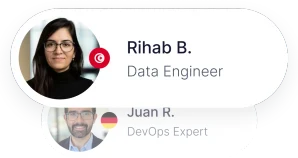
After an average of 2 days, receive a selection of hand-picked, ready-to-work specialists, with direct access to booking a call to interview them.
3
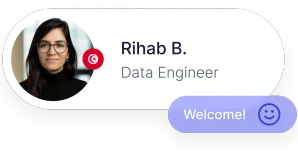
Integrate your new team members in 2 weeks or less. We’ll handle HR and admin, so you don’t lose momentum.
Hire top-tier, vetted talent. Fast.


"Je recommande vivement de travailler avec Proxify lorsque vous développez un produit, qu’il s’agisse de constituer une toute nouvelle équipe ou de renforcer une équipe existante. Proxify dispose des bons profils pour cela."


"Nous pouvons compter sur Proxify pour sélectionner de bons développeurs qui nous aident à accélérer le processus."


"Les candidats proposés par Proxify sont d’excellent niveau."
Passez la pile de CV. Notre réseau représente l'élite des 1 % de Développeurs BigQuery dans le monde entier, couvrant plus de 1 000 compétences techniques, avec une moyenne de huit ans d'expérience—minutieusement vérifiées et instantanément disponibles.

"Quality is at the core of what we do. Our in-depth assessment process ensures that only the top 1% of developers join the Proxify network, so our clients always get the best talent available."
Stoyan Merdzhanov
VP Assessment

Rafael Weiss
Client Engineer


 +40
+40 Votre Responsable Ingénierie prend le temps de comprendre en profondeur vos défis techniques. Grâce à son expertise, vous obtenez des professionnels parfaitement adaptés, prêts à résoudre rapidement les défis les plus complexes de votre feuille de route.

Sam Hewitt
Client Manager
Votre partenaire à long terme, offrant un soutien personnel en intégration, en RH et en administration pour gérer vos développeurs Proxify.
Service personnalisé exceptionnel, adapté à chaque étape—car vous méritez rien de moins.
Google BigQuery is a powerful cloud-based data warehouse built by Google. It allows users to store, manage, and analyze large amounts of data quickly and efficiently. BigQuery is part of Google Cloud Platform (GCP) and is known for its speed, scalability, and ability to handle petabytes of data.
BigQuery uses SQL (Structured Query Language), so if your team already works with SQL, it will be easy to get started. Unlike traditional databases, BigQuery is serverless. This means you don’t need to manage infrastructure or worry about hardware. Google takes care of all the back-end management.
Some of BigQuery’s key features include:
BigQuery separates storage from compute, which means you can scale them independently. This makes it easier to manage costs and handle workloads that change in size. Additionally, BigQuery supports federated queries, which allow you to query data stored in other systems like Google Sheets or Cloud SQL, without having to move the data first.
BigQuery also comes with built-in security features, such as encryption at rest and in transit, IAM roles, and audit logging. This makes it suitable for organizations that need to follow strict compliance standards like HIPAA or GDPR.
Many industries use BigQuery to gain insights from their data. Here are some common applications by industry:
BigQuery is flexible, making it useful for both real-time data analysis and long-term data storage.
When hiring a BigQuery developer, certain skills are essential to ensure they can handle your data needs. These are the core skills to look for:
BigQuery is a SQL-based tool. Developers must know how to write and optimize complex SQL queries.
They should understand how to use BigQuery alongside other GCP tools like Cloud Storage, Dataflow, and Pub/Sub.
Good developers should know how to design data structures that support efficient queries and storage.
Experience in building pipelines to extract, transform, and load data into BigQuery is important.
Developers should be able to optimize queries and manage costs by understanding BigQuery's pricing model and partitioning strategies.
Candidates should know how BigQuery executes queries: distributed processing, slot allocation, job queues, and execution stages. This is crucial for performance tuning.
Add expectation to use Cloud Monitoring, Logging, and Audit Logs to track BigQuery jobs and diagnose performance issues.
In addition to the must-have skills, there are other skills that can add value to your team:
BigQuery ML
Experience with BigQuery ML to build machine learning models directly inside BigQuery.
Python or JavaScript
Programming languages like Python or JavaScript help when writing custom scripts or using BigQuery with APIs.
Infrastructure-as-code
Terraform or Deployment Manager are also nice-to-have skills to manage datasets, scheduled queries, IAM policies, and resources as code.
Visualization tools
Familiarity with Looker, Data Studio, or Tableau for creating dashboards and reports.
Data governance and security
Understanding of data security, access controls, and GDPR compliance.
Git and DevOps tools
Experience using version control and CI/CD tools for managing code and workflows.
Here are some sample questions to help you evaluate BigQuery developers:
Q1: What is the difference between partitioned and clustered tables in BigQuery?
Answer: Partitioned tables are divided based on a column, like a date. This reduces the amount of data scanned during queries. Clustered tables organize data within partitions based on one or more columns to speed up query performance.
Q2: How do you optimize a BigQuery query that is running slowly?
Answer: I check if the table is partitioned and clustered properly. I also look for unnecessary columns being selected and apply filters early. Using EXPLAIN helps to analyze the query execution plan.
Q3: Describe a situation where you built an ETL pipeline for BigQuery.
Answer:**** In my last role, I used Cloud Dataflow to process raw logs, transform them into a clean format, and load them into BigQuery daily. I used scheduled queries for further transformation inside BigQuery.
Q4: What are BigQuery's pricing models?****
Answer: There are two main pricing models: on-demand and flat-rate. On-demand charges per query based on data scanned, while flat-rate offers a fixed monthly cost for reserved capacity.
Q5: How do you control user access in BigQuery?
Answer: I use IAM roles to assign the right permissions. For example, data analysts get viewer or query access, while engineers have editor or admin roles.
Q6: Can you explain federated queries in BigQuery?
Answer: Federated queries allow you to query data in external sources like Google Cloud Storage, Google Sheets, or Cloud SQL directly from BigQuery. This is useful when you want to analyze data without importing it into BigQuery.
Q7: How do you manage costs in BigQuery?
Answer: I manage costs by selecting only needed columns, using filters, partitioning and clustering tables properly, and avoiding SELECT *. I also monitor usage with the GCP billing dashboard and set budget alerts.
Q8: What are some limitations of BigQuery?
Answer: Some limitations include lack of full transaction support, quotas on the number of jobs per day, and slower performance for small queries compared to traditional databases. It’s optimized for big data, not small frequent updates.
Q9: How do you ensure data quality in BigQuery pipelines?
Answer: I use validation rules, row counts, and sample checks during ETL. I also use monitoring tools and error logging to detect issues early.
Q10: How do you schedule jobs in BigQuery?****
Answer: I use scheduled queries or external tools like Cloud Composer (based on Apache Airflow) to automate query execution and data workflows.
Even experienced developers can make mistakes when working with BigQuery. Being aware of these common pitfalls can help your team avoid unnecessary costs and performance issues:
Running queries with SELECT * may seem convenient, but it often results in scanning more data than necessary, which increases costs and slows down performance. In addition, using deeply nested SELECT statements or excessive WITH clauses—especially when they generate large intermediate result sets—can compound these issues. These patterns can make queries harder to optimize, consume more memory, and lead to slower execution times. Always aim to select only the necessary columns and streamline query logic to minimize overhead.
Not using partitioned or clustered tables can lead to full table scans. Always consider how your data will be queried and apply appropriate partitioning strategies.
Failing to validate or clean data before loading into BigQuery can cause issues in downstream analysis and reporting. Implement checks for data quality early in the pipeline.
BigQuery charges based on the amount of data processed. Developers should monitor query usage and avoid unnecessary joins or complex subqueries that process large volumes.
In large teams, inconsistent naming conventions, undocumented datasets, and ad hoc query logic can create confusion. Enforce standards and maintain clear documentation.
Manually running queries is error-prone. Use scheduled queries or orchestration tools like Cloud Composer to automate and track your data workflows.
It’s important to grant the least privilege necessary using IAM roles. Over-permissioned access can lead to accidental data deletion or exposure.
Successfully hiring a BigQuery developer is only the beginning. A well-planned onboarding process ensures they become productive and integrated with your team quickly. Here are a few practical tips:
Ensure the developer has access to BigQuery, GCP services, documentation, and internal knowledge bases. Set up accounts and permissions early to avoid delays.
Help them understand your existing data architecture, including naming conventions, schemas, and business logic. This speeds up their learning curve and prevents confusion.
Pair the new hire with an experienced team member who can answer questions, review code, and help them get familiar with workflows and expectations.
Assign small, well-scoped tasks first. This builds confidence and allows them to understand your data ecosystem before taking on bigger responsibilities.
Make sure the developer understands how their work fits into the larger goals of the business. Knowing what KPIs or decisions their data supports leads to better outcomes.
Ask new developers to document what they learn. This not only reinforces their understanding but also improves onboarding for future hires.
Define what success looks like in the first 30, 60, and 90 days. Use regular check-ins to give feedback and adjust goals.
BigQuery is a powerful tool for businesses that need fast and scalable data analysis. Hiring a skilled BigQuery developer can help you unlock the full potential of your data. Look for strong SQL skills, GCP experience, and a good understanding of data modeling and ETL pipelines. While advanced features like BigQuery ML or data visualization are not mandatory, they can bring extra value.
Use this guide to identify the right skills, ask the right interview questions, and build a strong team capable of turning raw data into business insights. With the right developer, you can make smarter decisions and gain real value from your data.
Embaucher un Développeurs BigQuery?
Experts de BigQuery triés sur le volet avec des antécédents éprouvés, dignes de confiance par les entreprises mondiales.
Nous travaillons exclusivement avec des professionnels de premier ordre. Nos rédacteurs et réviseurs sont des experts de l'industrie soigneusement sélectionnés du réseau Proxify qui veillent à ce que chaque contenu soit précis, pertinent et fondé sur une expertise approfondie.

Ahmed Mahmoud
Senior Data Engineer
Ahmed is a Data Engineer with eight years of commercial experience, specializing in developing and deploying scalable Machine Learning algorithms and ETL jobs. He has extensive experience with Google Cloud and Terraform, creating robust and efficient solutions for processing large datasets.


Choisi par 2 500+ entreprises internationales