"Ik zou Proxify zeker aanraden wanneer je een product bouwt, of je nu een volledig nieuw team samenstelt of een bestaand team opschaalt. Proxify heeft daarvoor de juiste mensen."

Het grootste netwerk van Europa voor tech-experts
Huur senior en gescreende NLP-ontwikkelaars in
Stop met het verspillen van tijd en geld op verkeerde mensen en focus op het bouwen van geweldige producten. We koppelen jou met de top 1% NLP freelance ontwikkelaars, consultants, engineers, programmeurs en experts binnen enkele dagen, geen maanden.
ISO 27001-
certificaat
Huur NLP-ontwikkelaars snel in met Proxify
Proxify helpt bedrijven om gescreende NLP-ontwikkelaars snel en met minder risico in te huren. We hebben techprofessionals gekoppeld aan zowel startups als internationale ondernemingen zoals Lufthansa, PwC en Education First. Slechts ongeveer 1% van de sollicitanten wordt toegelaten tot ons netwerk en 94% van de kandidaten die we voorstellen, wordt succesvol gematcht.
Alle NLP-ontwikkelaars doorlopen vijf selectiefases, waaronder AI-ondersteunde screening, assessments voor Engels en technische vaardigheden, een soft-skillsinterview en een live technisch interview met senior engineers.
Na een kennismakingsgesprek van 25 minuten ontvang je binnen gemiddeld 2 dagen een zorgvuldig samengestelde shortlist met NLP-ontwikkelaars. Je zit nergens aan vast totdat je een match goedkeurt, er is geen langdurige contractuele verplichting en je hebt de mogelijkheid om ontwikkelaar op je eigen loonlijst over te nemen.
Snel inhuren met Proxify
Rol:
Machine Learning
Type:
Other
Populariteit:
Laag
Proxify-tarief:
Vanaf € 31,90/h
Word gekoppeld in 2 dagen
Huur met 94% overeenstemming succes
Praat vandaag nog met een NLP aanwervingsdeskundige
De ultieme gids voor aannemen: vind en huur een top NLP Expert in
Getalenteerde NLP-ontwikkelaars nu beschikbaar

Traian V.
Machine Learning Engineer
Romania
Vertrouwd lid sinds 2025
6 jaar ervaring
Traian is een Senior Machine Learning Engineer met meer dan zeven jaar commerciële ervaring die AI oplossingen levert over de klantenondersteuning automatisering, computerzicht, natuurlijke taalverwerking en generatieve AI.
Expert in

Georgios B.
Lead AI Engineer
Greece
Vertrouwd lid sinds 2026
10 jaar ervaring
Een Lead Machine Learning Engineer met meer dan 10 jaar commerciële ervaring in het ontwerpen en implementeren van AI-systemen in productie, gespecialiseerd in Natural Language Processing (NLP), Large Language Models (LLM's) en Generative AI. Hij heeft een PhD in NLP gericht op LLM fine-tuning en moderne transformerarchitecturen en heeft onderzoek gepubliceerd in Springer, IEEE en IFIP.
Expert in

Roberto N.
Machine Learning Engineer
Portugal
Vertrouwd lid sinds 2023
15 jaar ervaring
Roberto is a seasoned Machine Learning Engineer with over a decade of commercial experience spanning data science, machine learning, cloud computing, and software engineering.
Expert in

Miguel A.
Data Scientist
Spain
Vertrouwd lid sinds 2025
7 jaar ervaring
Miguel is een ervaren AI Engineer met zeven jaar praktische, commerciële ervaring in het ontwerpen en implementeren van AI/ML-oplossingen met Python, Apache Spark, Azure ML en Databricks.
Expert in

Emil A.
Data Scientist
Azerbaijan
Vertrouwd lid sinds 2022
5 jaar ervaring
Emil is een ervaren datawetenschapper en PhD-kandidaat met vier jaar ervaring in de IT-sector, waarbij hij voornamelijk werkt op het gebied van machine learning, onderzoek, statistiek en data tools.
Expert in

Farid H.
Machine Learning Engineer
Azerbaijan
Vertrouwd lid sinds 2023
6 jaar ervaring
Farid is een deskundige engineer op het gebied van machine learning, met werkervaring bij verschillende techbedrijven en onderzoeksprojecten.
Expert in

Levon Y.
Senior ML Engineer
Portugal
Vertrouwd lid sinds 2026
8 jaar ervaring
Een Senior Machine Learning Engineer met meer dan zeven jaar commerciële ervaring in het ontwerpen, ontwikkelen en implementeren van productieklare Machine Learning-oplossingen op het gebied van fraudedetectie, natural language processing (NLP), computervisie, documentintelligentie en large language model (LLM)-toepassingen.
Expert in

Oguz K.
Data Scientist
Turkey
Vertrouwd lid sinds 2023
5 jaar ervaring
Oguz is een bekwame datawetenschapper met vijf jaar professionele ervaring en diepgaande kennis van Python en datawetenschap.
Expert in

Aniello P.
Data Engineer
Italy
Vertrouwd lid sinds 2025
7 jaar ervaring
Aniello is een Senior Data Engineer met meer dan zeven jaar commerciële ervaring in het ontwikkelen van datagestuurde systemen van productiekwaliteit. Hij is gespecialiseerd in software en machine learning pipeline ontwikkeling met behulp van Python, Azure, Databricks en distributed computing frameworks.
Expert in

Giorgi B.
Data Scientist
Georgia
Vertrouwd lid sinds 2023
6 jaar ervaring
Giorgi is een doorgewinterde Senior Data Scientist met zes jaar ervaring, gespecialiseerd in HR-technologie, cloud-gebaseerde POS-systemen, SaaS, cloud computing, e-commerce en AI-technologie.
Expert in

Omer A.
Data Scientist
Turkey
Vertrouwd lid sinds 2022
6 jaar ervaring
Omer is een hoogopgeleide Data Scientist en Machine Learning Engineer met meer dan vier jaar ervaring in onderzoek en ontwikkeling. Zijn expertise strekt zich uit over verschillende domeinen, waaronder LLM's, NLP, Versterkingsleren, Tijdreeksvoorspelling, Medische Beeldvorming en end-to-end Machine Learning-systeemarchitectuur.
Expert in

João M.
Deep Learning Research Engineer
Netherlands
Vertrouwd lid sinds 2025
10 jaar ervaring
João is een Deep Learning Engineer bij ASML met meer dan 10 jaar ervaring in kunstmatige intelligentie.
Expert in
Traian V.
Machine Learning Engineer
Romania
Vertrouwd lid sinds 2025
6 jaar ervaring
Traian is een Senior Machine Learning Engineer met meer dan zeven jaar commerciële ervaring die AI oplossingen levert over de klantenondersteuning automatisering, computerzicht, natuurlijke taalverwerking en generatieve AI.
Expert in
NLP
Python
Machine Learning
Data Science
Computer Vision
De ultieme gids voor aannemen: vind en huur een top NLP Expert in
Drie stappen naar jouw perfecte NLP-ontwikkelaar
We combineren het beste van AI met de diepgaande expertise van ons team.
Begin eenvoudig in drie stappen.
1
Videocall inplannen
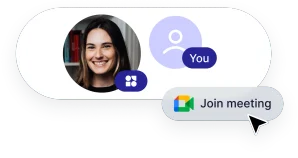
Laat ons weten wat je precies nodig hebt, zodat we perfecte kandidaten kunnen voordragen.
2
De kandidaten bekijken
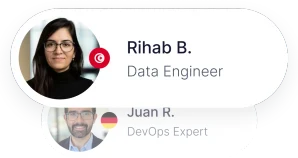
Binnen gemiddeld 2 dagen krijg je een selectie met zorgvuldig gekozen, direct inzetbare kandidaten met wie je meteen een gesprek kunt inplannen.
3
Samen aan de slag
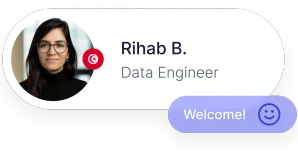
Je nieuwe teamleden kunnen binnen twee weken aan de slag. Wij zorgen dat alles snel en goed geregeld wordt.
Vind NLP-ontwikkelaars
Huur top techtalent in gescreend en snel beschikbaar.
Waarom klanten Proxify vertrouwen


"We kunnen erop vertrouwen dat Proxify goede developers selecteert die ons helpen het proces te versnellen."


"Kandidaterne fra Proxify er i absolut topklasse."
Alleen senior talent, zorgvuldig geselecteerd
Vergeet die stapel cv's. Ons netwerk bestaat alleen uit de beste software engineers: de top 1% wereldwijd, met gemiddeld acht jaar ervaring in meer dan 1.000 techcompetenties. Zorgvuldig geselecteerd en direct inzetbaar."
Aanmeldingstraject
Onze selectie is een van de strengste in de sector. Iedere maand melden meer dan 20.000 developers zich aan voor ons netwerk, maar slechts 2 tot 3% wordt toegelaten. Iedereen die zich aanmeldt wordt eerst beoordeeld via ons Applicant Tracking System. Hierbij letten we op zaken als het aantal jaar ervaring, tech-stack, tarieven, locatie en Engelse taalvaardigheid.
Beoordelingsgesprek
De techtalenten die door de eerste ronde komen, gaan in gesprek met onze recruiters. Hier gaan we dieper in op hun Engelse taalvaardigheid, sociale vaardigheden, technische capaciteiten, motivatie, tarieven en beschikbaarheid. Ook houden we rekening met de vraag en het aanbod van hun specifieke skills op de markt.
Assessment
De assessment die volgt na het gesprek richt zich op praktijkgerichte coderingsuitdagingen en bugfixes, met een tijdslimiet om te beoordelen hoe kandidaten presteren onder druk. De test weerspiegelt het type werk dat zij voor onze klanten zullen uitvoeren, zodat we zeker weten dat ze over de juiste expertise beschikken.
Technisch interview
Techtalenten die slagen voor de assessment gaan door naar het technische interview met onze senior engineers. Tijdens dit gesprek werken ze aan codeeropdrachten en lossen ze ter plekke problemen op. Zo krijgen we goed inzicht in hun technische vaardigheden, probleemoplossend vermogen en manier van denken bij complexe vraagstukken.
Welkom bij Proxify
Wanneer iemand alle voorgaande stappen met succes doorloopt, wordt deze persoon toegelaten tot het Proxify-netwerk.

"Alles draait bij ons om kwaliteit. Door onze zorgvuldige selectie wordt slechts 1% van de developers toegelaten tot het Proxify-netwerk, zodat onze klanten altijd het beste talent krijgen."
Stoyan Merdzhanov
VP Assessment
Er staat een team voor je klaar

Petar Stojanovski
Client Engineer


 +40
+40 Onze client engineers brengen de technische uitdagingen van je bedrijf nauwkeurig in kaart. Met deze kennis en hun expertise koppelen ze je bedrijf snel aan de juiste techprofessionals.

Cheryl Engels
Klantmanager Benelux
Onze klantmanagers helpen je bedrijf bij de onboarding en bieden persoonlijke ondersteuning op lange termijn.
Persoonlijke service op maat, bij elke stap. Zo krijgt je bedrijf wat het nodig heeft.
A guide to help you hire NLP Developers in 2025
Industries and applications
Natural Language Processing (NLP) is a rapidly evolving subfield of artificial intelligence that focuses on enabling machines to understand, interpret, and generate human language. From virtual assistants and chatbots to text analytics and sentiment analysis, NLP powers many of the AI-driven technologies we interact with daily.
In 2025, demand for NLP developers will continue to grow as businesses increasingly rely on data from human communication, text, voice, chat, and more. What used to take teams months to implement (e.g., sentiment analysis) now takes one engineer weeks using an LLM. Hiring skilled NLP developers is essential for building intelligent applications that can extract value from unstructured language data while maintaining performance, scalability, and ethical alignment.
Industries and applications
NLP's versatility enables its application across a wide range of industries:
- Customer experience (CX): Drives chatbots, ticket classification, and sentiment analysis in multi-channel support systems.
- Healthcare: Extracting information from clinical notes, automating diagnostics, or assisting in patient communication via voice bots.
- Finance: Automating customer support, fraud detection through transactional text, and analysing earnings reports.
- eCommerce: Powering intelligent search, product recommendations, and sentiment-driven marketing.
- Legal & compliance: Document classification, contract parsing, and regulatory text monitoring.
- Education: Intelligent tutoring systems, automated essay grading, and language learning platforms.
- Media & publishing: Supports article summarisation, moderation, metadata tagging, and recommendation engines.
NLP can benefit any business that works with textual data, such as emails, support tickets, product reviews, legal documents, and more.
Must-have skills for NLP Developers
To build robust NLP solutions, top developers typically possess the following core competencies:
- Strong Python skills with experience in NLP libraries such as NLTK, spaCy, Hugging Face Transformers, or AllenNLP.
- Deep understanding of language modeling (e.g., BERT, GPT, T5) and familiarity with fine-tuning transformer-based models for downstream tasks.
- Experience with classical NLP techniques, such as tokenization, lemmatization, POS tagging, dependency parsing, and named entity recognition.
- Machine learning fundamentals, including model evaluation, feature engineering, and cross-validation.
- Text vectorization techniques including word embeddings (Word2Vec, GloVe) and contextual embeddings.
- Data wrangling and preprocessing using pandas, regex, and language-specific techniques for cleaning noisy real-world data.
- Deployment skills, including building NLP APIs with FastAPI or Flask and packaging models for production.
- Familiarity with ethical AI, including bias mitigation, explainability in language models, and data privacy considerations.
Nice-to-have skills
While not mandatory, the following skills can set candidates apart:
- Multilingual NLP experience or work with low-resource languages.
- Knowledge of LLM frameworks and prompt engineering, particularly for GPT-style inference.
- Experience integrating NLP with speech (ASR/TTS) using tools like Whisper, DeepSpeech, or Coqui TTS.
- MLOps skills include versioning (DVC), monitoring (Evidently AI), and model registry tools (MLflow).
- Data annotation and augmentation techniques using Snorkel or Prodigy.
- Working with vector databases (e.g., Pinecone, Weaviate) for semantic search or RAG (Retrieval Augmented Generation) pipelines.
Interview questions and example answers
1. What is tokenisation, and why is it important in NLP?
Example answer: Tokenisation is the process of splitting text into smaller units such as words, subwords, or sentences. It is a fundamental step in NLP as it structures unstructured text for further processing, such as parsing, classification, or embedding.
2. How would you fine-tune a BERT model for sentiment analysis?
Example answer: I’d use a labelled dataset with sentiment tags, tokenise it using BERT's tokeniser, add a classification head, and fine-tune using a cross-entropy loss. I'd monitor validation accuracy and apply early stopping or learning rate scheduling as needed.
3. How do you evaluate an NLP classification model?
Example answer: Common metrics include accuracy, precision, recall, and F1-score. For imbalanced datasets, precision-recall AUC or ROC AUC are more informative. I also examine confusion matrices and error analysis to understand misclassifications.
4. What are some techniques to handle out-of-vocabulary (OOV) words?
Example answer: Using subword tokenisation (e.g., Byte Pair Encoding) helps handle OOVs. Alternatively, using contextual embeddings like BERT eliminates the need for fixed vocabularies.
5. What are the ethical challenges in deploying NLP models?
Example answer: NLP models can exhibit gender, racial, or political biases learned from training data. To mitigate harm, it’s crucial to perform fairness audits, use debiasing methods, and ensure transparency about model limitations.
6. What are Retrieval-Augmented Generation (RAG) pipelines, and when are they useful?
Example answer: RAG combines document retrieval with generation by augmenting the input to a language model with relevant documents. It improves factual accuracy and reduces hallucinations in tasks like QA, summarization, or enterprise search.
7. How do you handle class imbalance in text classification tasks?
Example answer: I’d use strategies like resampling (oversampling minority, undersampling majority), weighted loss functions, or generating synthetic samples (e.g., with back-translation). Evaluation metrics like precision, recall, and AUC are more appropriate than accuracy.
8. What are the advantages of using Transformer-based models over RNNs or LSTMs?
Example answer: Transformers enable parallel processing and capture long-range dependencies via self-attention, making them more efficient and effective on large-scale text. They’ve largely replaced RNNs/LSTMs in modern NLP tasks like translation, summarization, and question answering.
9. How would you implement Named Entity Recognition (NER) for a custom domain?
Example answer: I’d start with an existing model like spaCy or fine-tune a transformer like BERT on annotated data for the domain. If labeled data is scarce, I’d use weak supervision or transfer learning, and evaluate using F1-score on entity-level spans.
10. What is the difference between stemming and lemmatization, and when would you use each?
Example answer: Stemming crudely chops word endings (e.g., “running” → “run”) and may produce non-words. Lemmatization uses vocabulary and morphology to return base forms (e.g., “better” → “good”). Use stemming for speed in large-scale search; lemmatization for precision in tasks like information extraction.
Summary
Hiring NLP developers in 2025 means looking beyond just technical know-how. A great candidate combines linguistic intuition with deep AI expertise, production-level coding skills, and an awareness of ethical implications.
As language data grows in strategic importance, companies need NLP developers to transform it into actionable insights through search, summarization, classification, or generation. By screening for the right mix of hard and soft skills, businesses can build NLP teams that drive innovation, user satisfaction, and intelligent automation at scale.
Huur een NLP-ontwikkelaars?
Vind NLP-ontwikkelaars
Handgeselecteerde NLP-experts met bewezen staat van dienst, vertrouwd door wereldwijde bedrijven.
Gecontroleerde auteur
We werken uitsluitend met topprofessionals. Onze schrijvers en beoordelaars zijn zorgvuldig geselecteerde industrie-experts uit het Proxify-netwerk die ervoor zorgen dat elk stuk inhoud nauwkeurig, relevant en geworteld is in diepgaande expertise.

Emil Aydinsoy
Data Scientist and Engineer
Emil is an accomplished Data Scientist and Ph.D. with five years of commercial experience in the IT sector, mainly working on Machine Learning, Research, Statistics, and Data Engineering Tools
Gerelateerde artikelen
Heb je een vraag over het inhuren van een NLP-ontwikkelaar?
Verken meer vaardigheden
Rol
Softwareproduct-engineering
Cloud en infrastructuur
Kwaliteitsborging
Design
Partner van meer dan 2.500 bedrijven wereldwijd